Appliance
Viking ventilation
Wall hoods, chimney hoods, the liners hidden inside joinery, ceiling units and the rear downdrafts that rise out of the counter. It is the shortest parts list in the kitchen — motor, capacitor, switch, lights, damper, filters — and the appliance most likely to be quietly running at half its output for a year.
- 2 symptoms we are called out to
- From $95 diagnostic, credited to the repair
- 59 cities and neighborhoods covered
- OEM parts available on order
The short version
What this equipment is, for a repair
Configurations
Wall · Chimney · Island · Liner · Rear downdraft · Ceiling
Access
Planned before the visit, not discovered on arrival
Parts
OEM, available on order
Diagnostic
From $95, credited to the repair
What goes wrong with it
Symptoms we are called out to on Viking ventilation
Each one covers the likely causes in the order they are worth checking, and what to do in five minutes before booking anything.
-
A hum is better news than silence Range hood not extracting
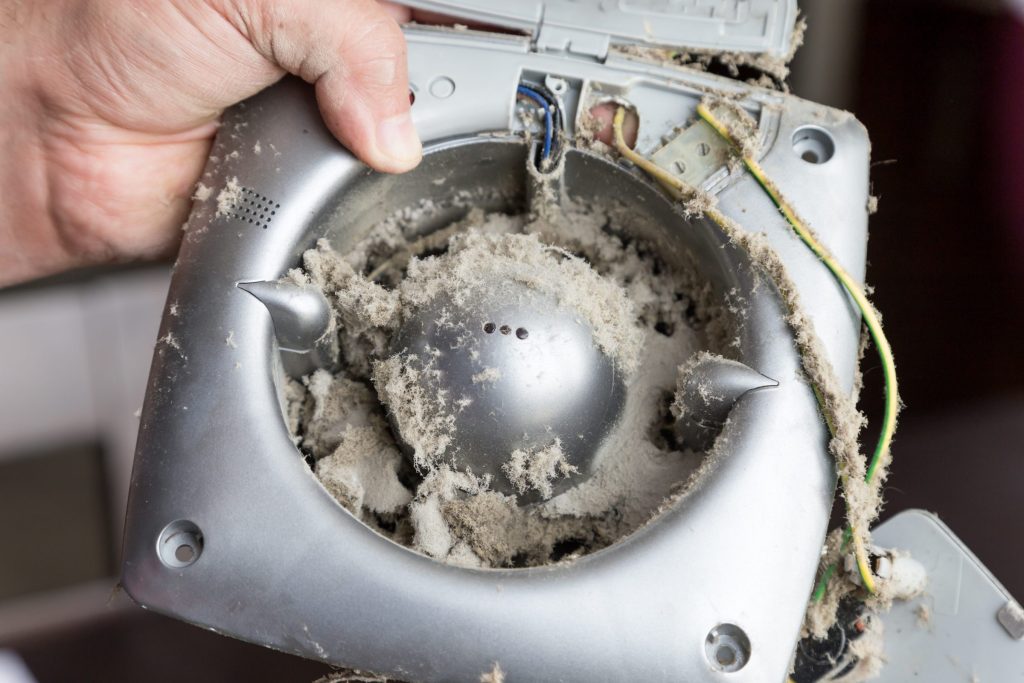
A hood that does nothing, hums without turning, or runs and moves no air. Three different repairs behind one complaint, and the cheapest of them is very common.
- No response at all from any speed
- A hum with no rotation
- It runs but the kitchen still fills with steam
-

A separate circuit entirely Range hood lights not working
Lamps that have gone out while the fan works perfectly, or lights that flicker. A separate circuit from the motor, and usually the least expensive call on this list.
- One lamp out, the rest fine
- All lamps out with the fan still working
- Flickering, or lights that come on and drop out
What we do on it
Repairs we carry out on Viking ventilation
Starting figures for this equipment in South Florida. The exact cost is confirmed after an on-site diagnostic — and this is not the whole list of what can go wrong, so call if your problem is not here.
-
from $165 Range hood & downdraft repair
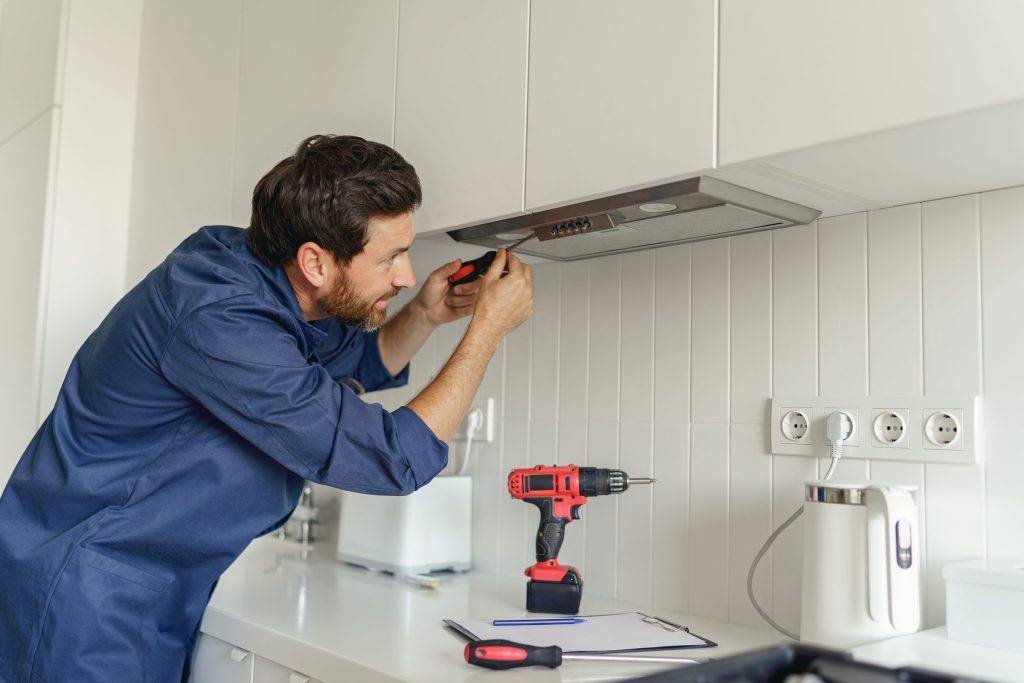
Motors, capacitors, lamps, filters and dampers — and on a downdraft, a lift mechanism that rises out of the counter. The cheap end of this list, and it should read that way.
- Motor and capacitor tested separately
- Baffle filters and the duct path checked
- Downdraft lift serviced as its own mechanism
In more detail
About Viking ventilation
Six shapes, one mechanism
Wall-mounted, chimney, island, the custom ventilator liners built inside cabinetry, ceiling units and the rear downdraft that rises out of the worktop. What is behind the shape is nearly always the same short list, which is why this is usually the quickest visit in the kitchen.
What actually goes wrong
- A motor that hums and does not turn. Capacitor first, then a wheel seized with old grease.
- Speeds that stop responding. The switch or the control, not the blower.
- Lights out. Lamps, holders, then the transformer on the LED models.
- A damper that no longer opens. Salt air is hard on the flap in a roof or wall cap, and a stuck damper is a hood pushing against a closed door.
- Rear downdrafts that will not rise. The lift mechanism, and it is the one part of a hood with moving joinery.
- Roof-mounted remote blowers. Out of sight, in the weather, and they age years ahead of the hood they belong to.
What is not broken
Going to full power on its own is designed behavior: the heat sensor takes over at about 165°F and hands back below 147°F. So is a hood that seems weak with a month-old filter in it — wash the baffles before booking anything.
What to have ready
Whether it is ducted outside or recirculating, whether the blower is in the hood or on the roof, and the width. If it is a liner inside cabinetry, say so: getting to it is most of the job.
This article is based on:
- Official manufacturer documentation
- Internal repair procedures
- Technician repair history
- Company quality standards
Before you book
Questions about Viking ventilation
The hood hums but the fan does not turn.
That is the sound of a motor being asked to start and not managing it — most often a failed run capacitor, sometimes a blower wheel seized with hardened grease. It is a repair rather than a replacement, and it is worth doing quickly: a motor left humming is a motor cooking its own windings.
It went to full speed by itself while I was cooking.
That is the hood doing exactly what it was built to do. Every Viking hood carries a heat sensor: at about 165°F underneath it the ventilator goes to full power on its own, and it drops back once the temperature falls under about 147°F. If it happens when nothing hot is below it, then the sensor is what has gone wrong — but the behavior itself is a safety feature, not a failure.
How often should the filters be cleaned?
Monthly for the baffle and mesh filters, which are dishwasher-safe, and more often if you fry or wok cook. If yours is a recirculating hood there are charcoal filters as well, and those are replaced rather than washed — about every six months. A blocked filter is the commonest reason a hood that "stopped working" has not actually broken.
Can I put a downdraft behind my range?
No, and the maker says so plainly. Downdrafts are for rangetops and cooktops without a grill, not for ranges and never for a char-grill: the heat and grease coming off a char-grill need an overhead hood. If somebody has installed one that way, the complaint is usually that the kitchen still smells of dinner, and no repair fixes that.
My hood is narrower than my range. Does that matter?
It does, and it is the one thing we cannot repair. A hood has to be at least as wide as the cooking surface under it to have any capture area, and it should hang between 30 and 36 inches above the surface — 24 to 27 for the 10-inch-high models. An undersized or overhung hood works exactly as well as it was installed to.
Where we do it
Across Miami-Dade, Broward, and Palm Beach
Same terms everywhere we go: an on-site diagnostic first, the price agreed in writing, and the exact figure confirmed once we have seen the unit.
Neighborhoods people ask for by name
 English