VikingRepair Miami

45 problems, described the way you would describe them

What your Viking is doing, and what it usually means.

Start here if there is nothing useful on the display — and on this make there very often is not. The grills, the ice machines and the hoods publish no code at all, the dishwashers flash two lights instead of showing one, and the current ranges turn a knob ring red. Every page below says what it usually means, what to check yourself first, and what it costs if it is a repair.

  • 45 problems, each with its own page
  • 11 appliance types, cold and hot
  • 21 linked to a published condition
  • from $95 diagnostic, credited to the repair

By what it is doing

Every problem we are called about

Grouped by appliance rather than by part, because nobody searches for a diverter valve. Where the appliance publishes something, the page names it; where it publishes nothing, the page carries the diagnosis itself.

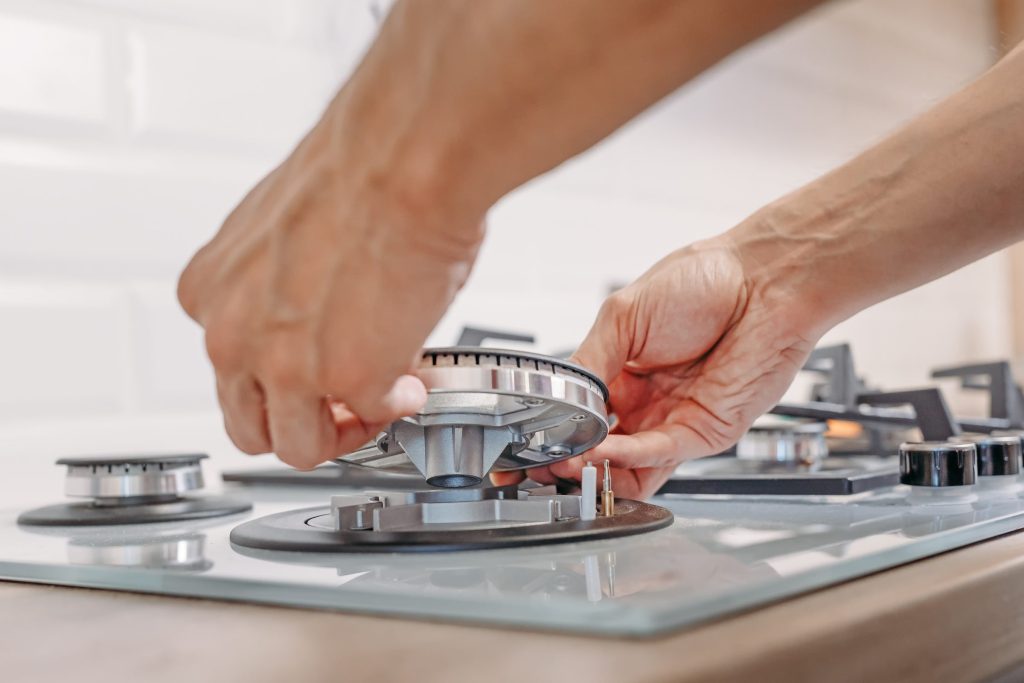
  • Two hands seating a burner head back onto its base on a gas cooktop
    It clicks, and nothing happens

    Burner will not light

    A burner that clicks and never catches, or catches and drops out a few seconds later. The appliance will tell you nothing about it — this maker publishes no code for gas — so the diagnosis is entirely in what the burner does.

    • Clicks and clicks without lighting
    • Lights and goes out after a few seconds
    • One burner out while the rest are fine
    What it usually means
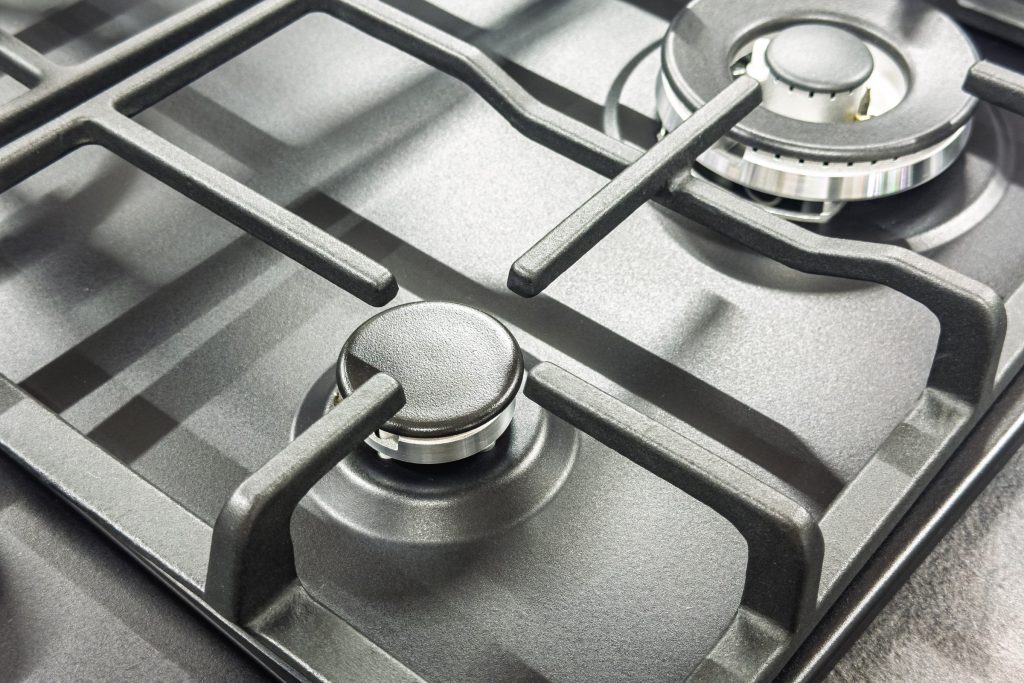
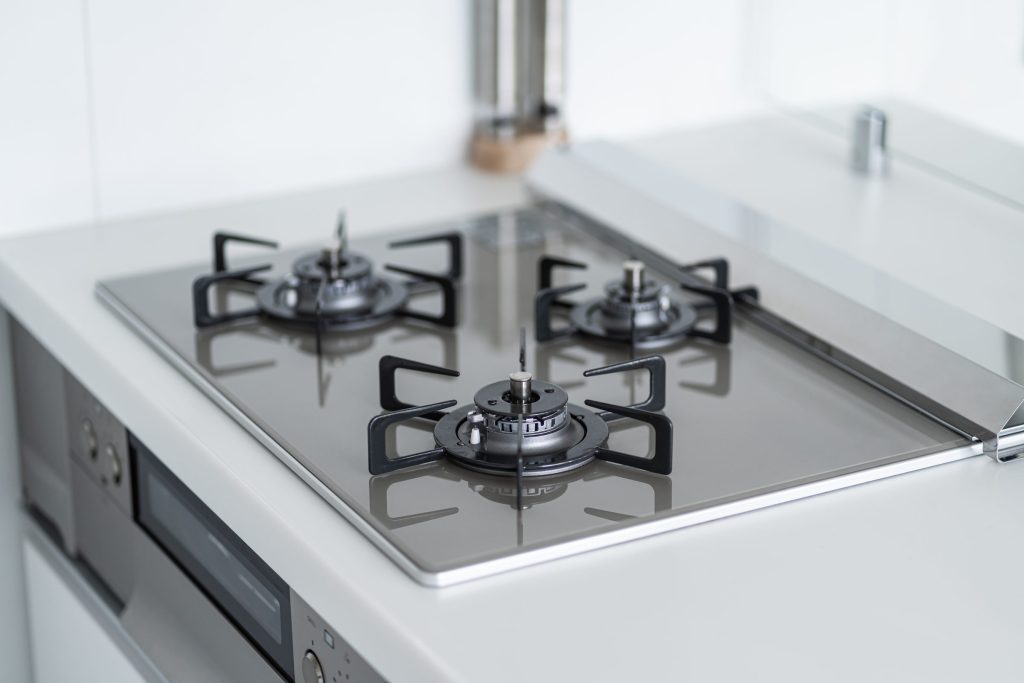
  • Two burner heads and their cast grates on a stainless cooktop
    Lazy on one side of the ring

    Open burner flame uneven or yellow

    A flame that is blue on one side and yellow and lazy on the other, or a ring that never quite makes a full circle. On an open burner this is visible, reachable and usually free to correct.

    • Yellow or orange tips on one side
    • Part of the ring not lighting at all
    • Sooting on the bottom of the pan
    What it usually means
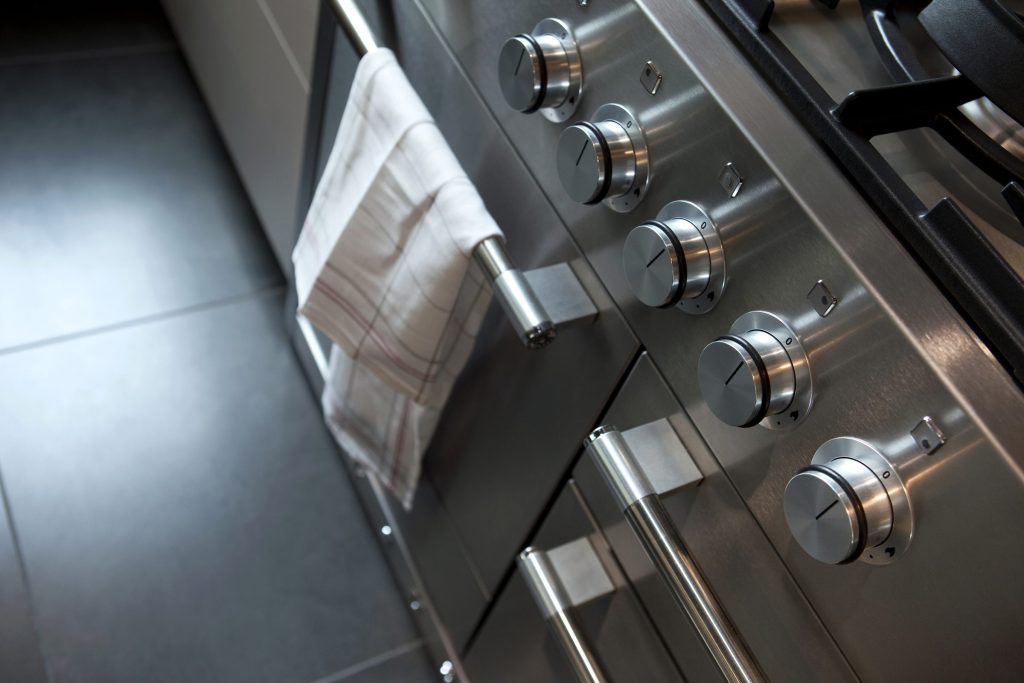
  • A towel hanging from the handle of a stainless range, its knobs in a row alongside
    Low is not low, or low goes out

    Simmer will not hold

    A burner that will not stay lit on its lowest setting, or a "low" that is still hot enough to boil. On professional equipment the simmer is a specification rather than an afterthought, and a burner that has lost it can be brought back.

    • The flame goes out at the lowest setting
    • Low is far hotter than it used to be
    • It holds until a lid goes on, then drops out
    What it usually means
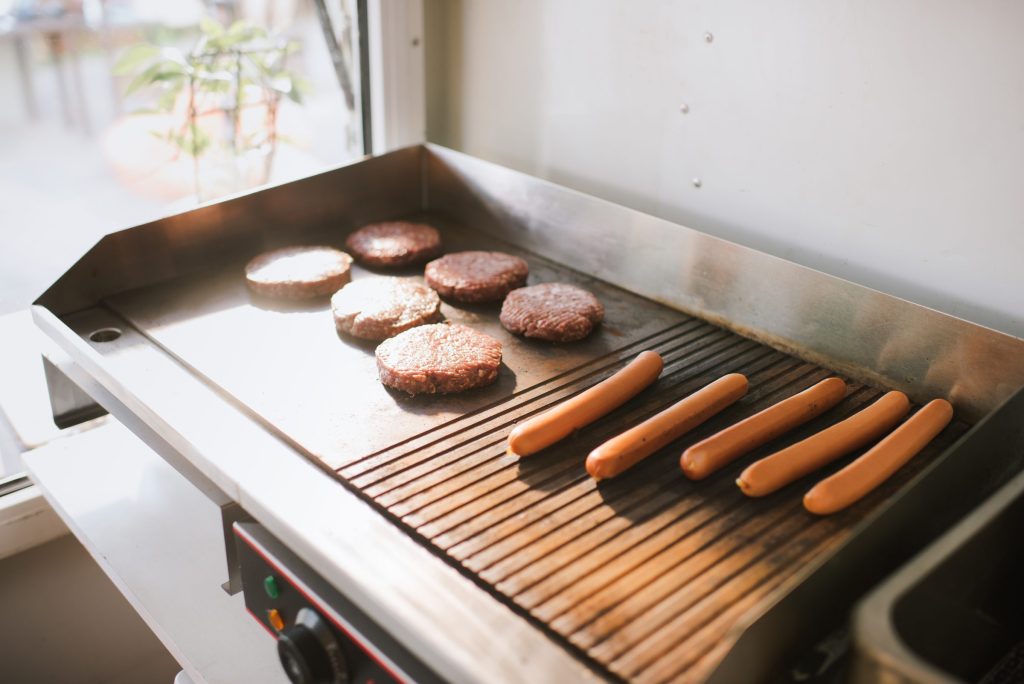
  • Burgers on a flat griddle plate beside hot dogs on the grill grates
    Cold in the middle of a wide range

    Griddle not heating

    The griddle on a 48-inch range or rangetop, cold or heating only in patches. It is the least-used surface in the kitchen and the one most likely to have seized quietly since the last time it was asked.

    • Cold everywhere
    • Hot in the middle, cold at one end
    • Takes far longer to come up than it used to
    What it usually means
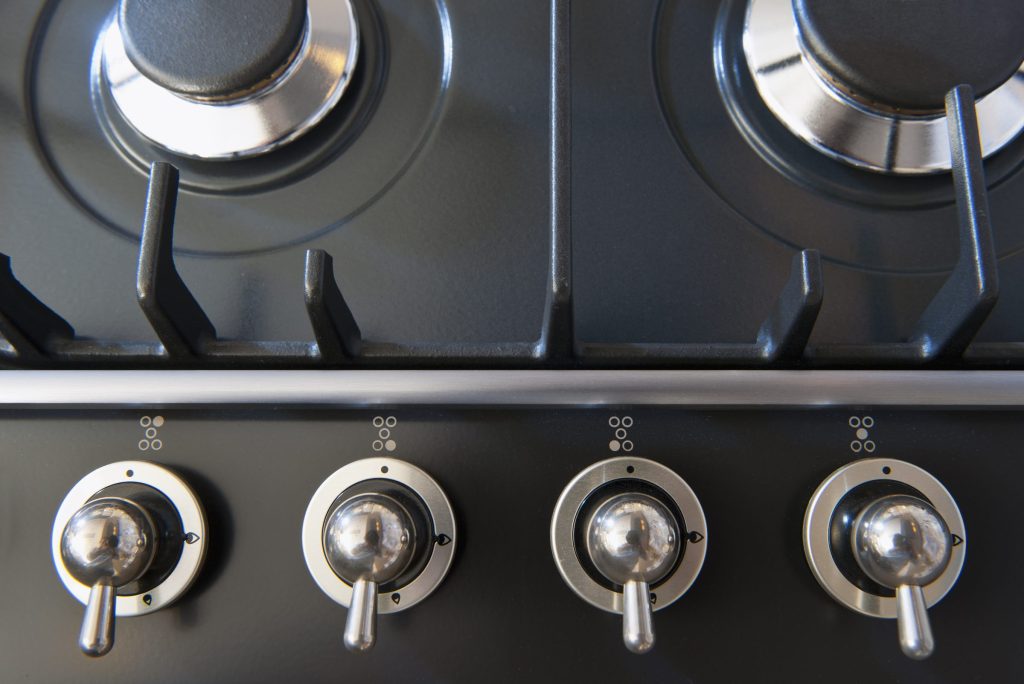
  • Four lever knobs in a row below the burners of a dark range
    On the 7 Series, the knob is the display

    Knob lights turned red

    On the current ranges the backlight behind the knobs goes red and a ring flashes a count. That is this appliance reporting an error — and the count is evidence that disappears the moment anything is switched off.

    • The backlight has changed to red
    • A knob ring flashing a repeating count
    • Nothing on any display, because there is not one
    What it usually means
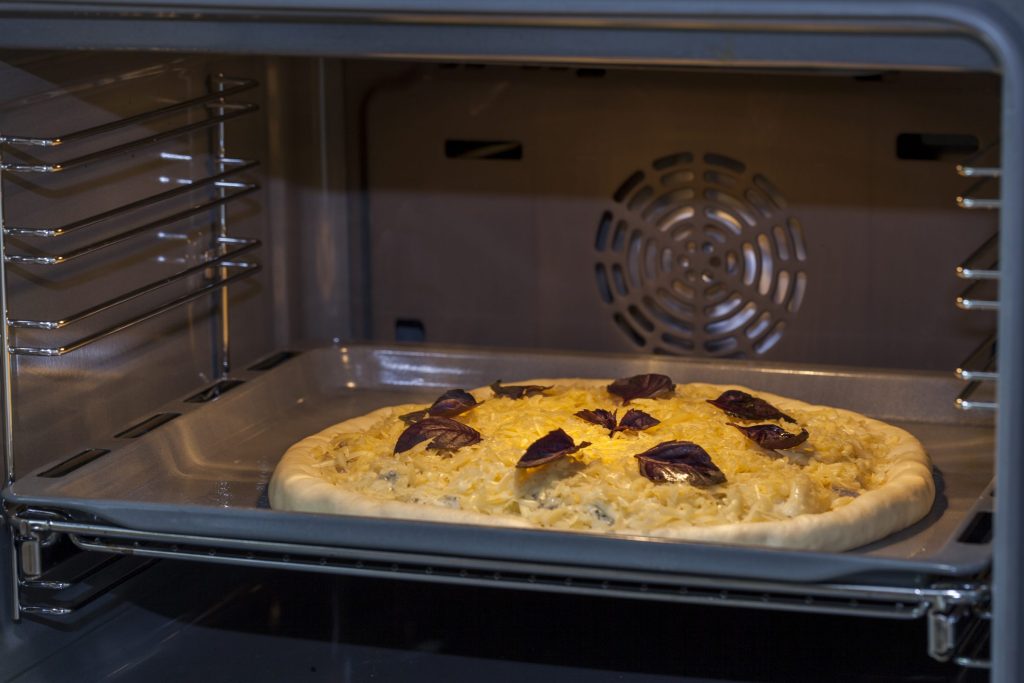
  • A pizza on a tray on the middle rack of an oven, the fan cover behind it
    The display often names the part

    Oven not heating

    An oven that sets a temperature and stays cold, or heats on one mode and not another. On this make the message is usually in words rather than in numbers, and RTD ERROR names the sensor outright.

    • Sets a temperature and stays cold
    • Broils but will not bake
    • A message in words on the display
    What it usually means
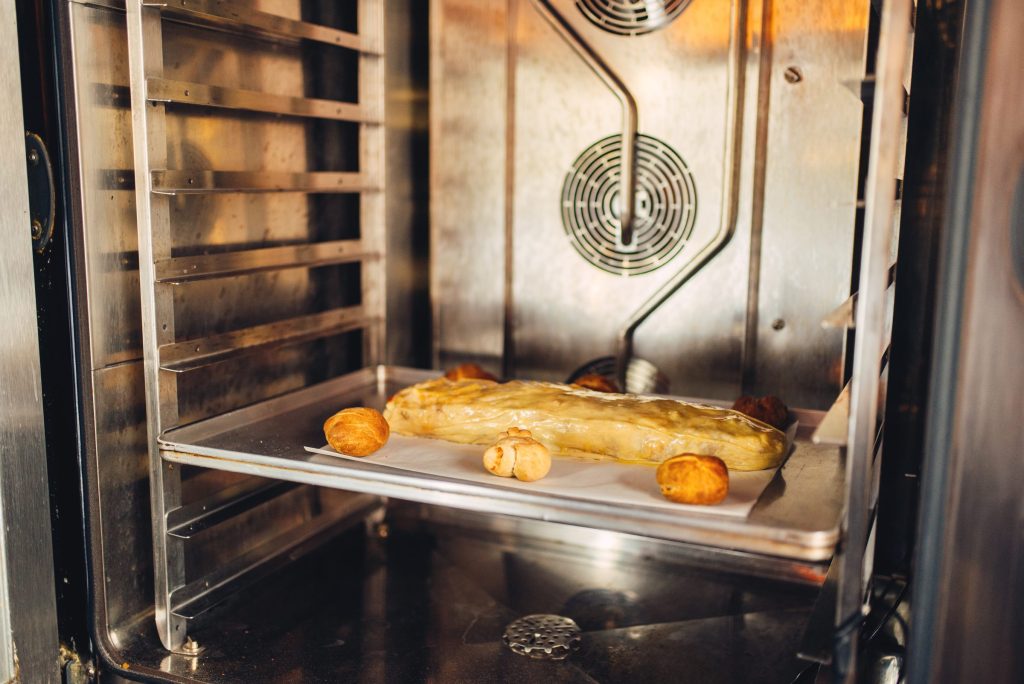
  • Pastries on a tray in a stainless oven cavity with the element visible above
    Obedient, and aiming at the wrong number

    Oven temperature wrong or uneven

    An oven that heats perfectly to a temperature that is not the one you set, or browns on one side and undercooks on the other. Almost always a measurement problem rather than a heating one.

    • Everything browning too fast or too slowly
    • One side or one shelf consistently darker
    • Baking that changed without anything else changing
    What it usually means
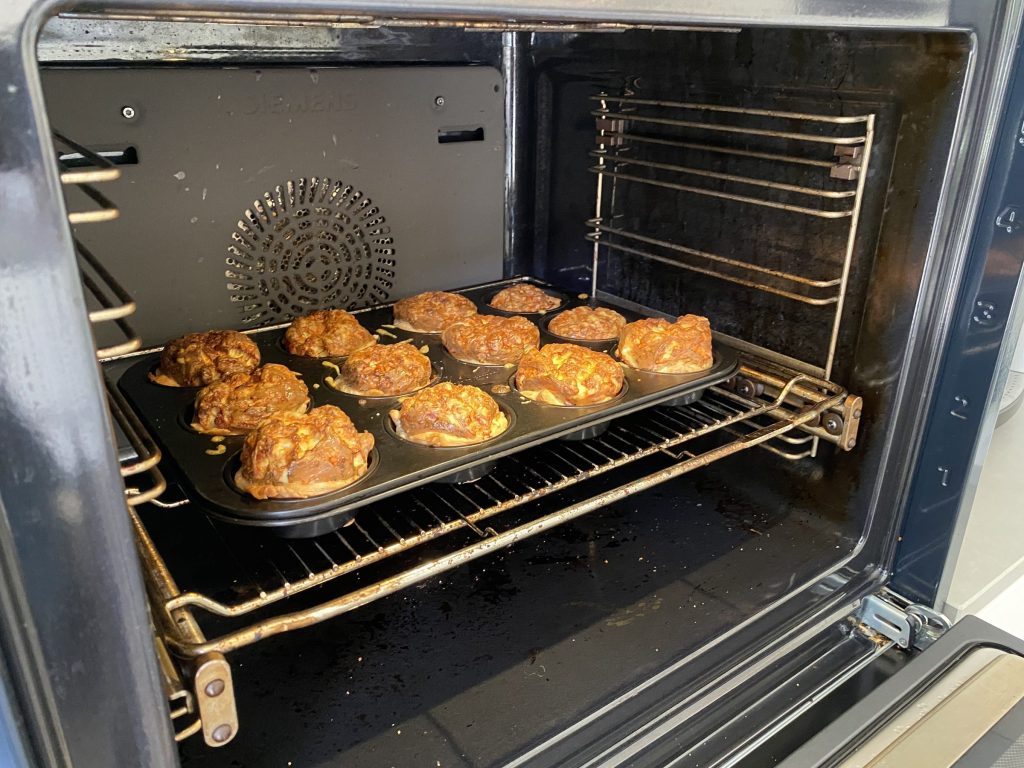
  • A tray of muffins on the rack of an oven with a soiled cavity
    The cycle that finds everything

    Oven dead after a self-clean

    An oven that ran a clean cycle and has not worked since. It is one of the most predictable calls on this equipment, and it is not because anything was done wrong.

    • Worked before the clean cycle, dead after it
    • The door still locked
    • A message that appeared during or after the cycle
    What it usually means
  • A dish inside a dark oven, seen through the closed door
    LATCH ERROR, in words

    Oven door locked shut

    A door the control cannot unlock, usually after a self-clean. This make publishes it as LATCH ERROR in plain English, which is as clear as a diagnosis gets.

    • Locked since a clean cycle
    • LATCH ERROR on the display
    • The latch audibly trying and not moving
    What it usually means
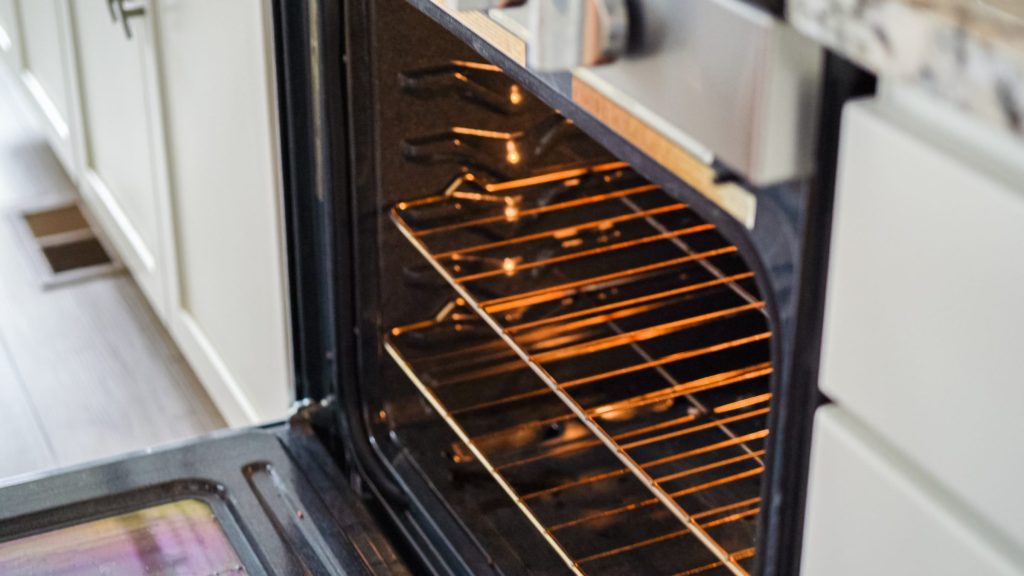
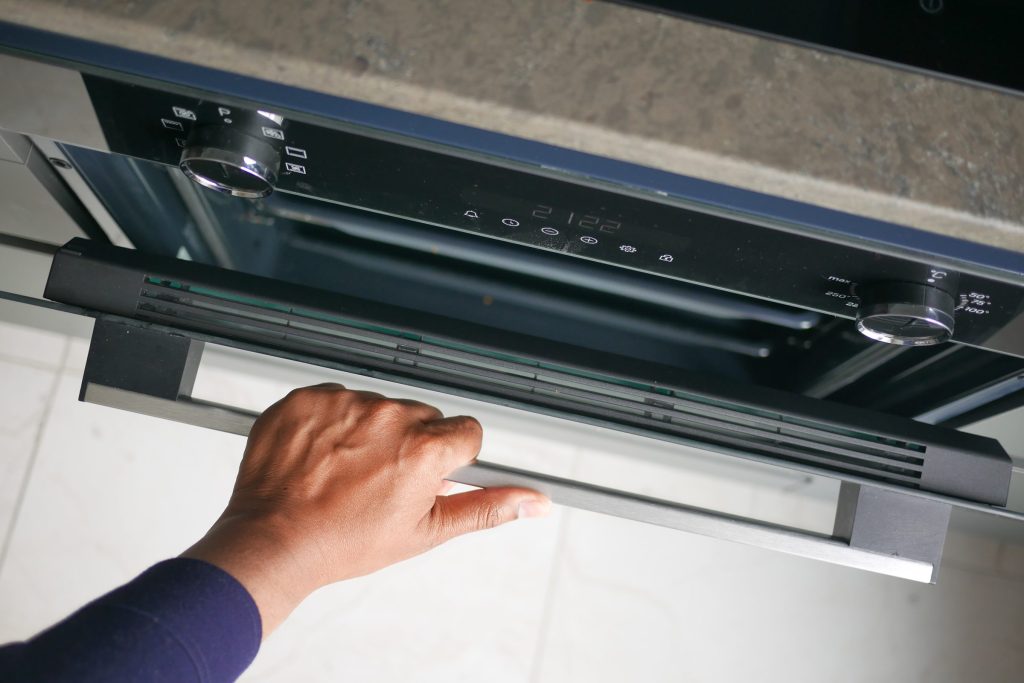
  • A built-in oven standing open, its door down and the cavity lamp lit on empty racks
    The gap you cannot see

    Oven door not closing properly

    A door that does not sit flush, springs back, or closes on a gap at one corner. On a French-door oven there are two leaves that have to arrive at the seal together, which adds a way for it to go wrong.

    • A visible gap at one corner
    • The door springs back slightly
    • Heat or steam escaping at one edge
    What it usually means
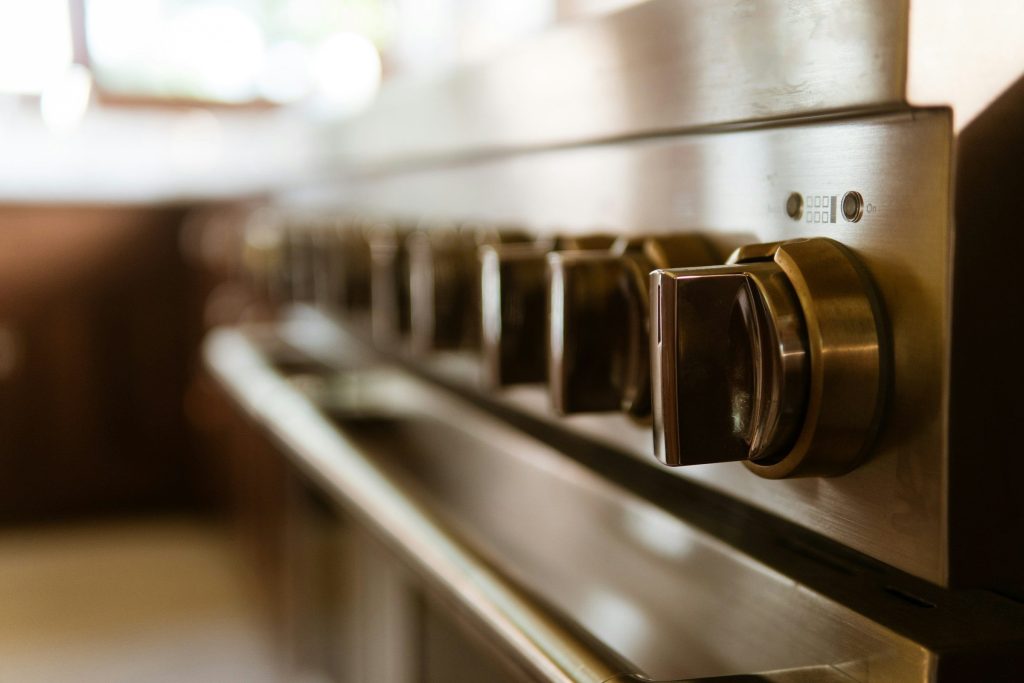
  • A row of brass control knobs along the front of a range
    KEYBOARD ERROR, and what it is not

    Oven controls not responding

    A panel that ignores presses, responds to the wrong one, or has gone dark. On this make there are three separate published messages behind it and they are three different repairs.

    • Some keys work and others do not
    • The panel is lit and ignoring everything
    • A message in words rather than a number
    What it usually means
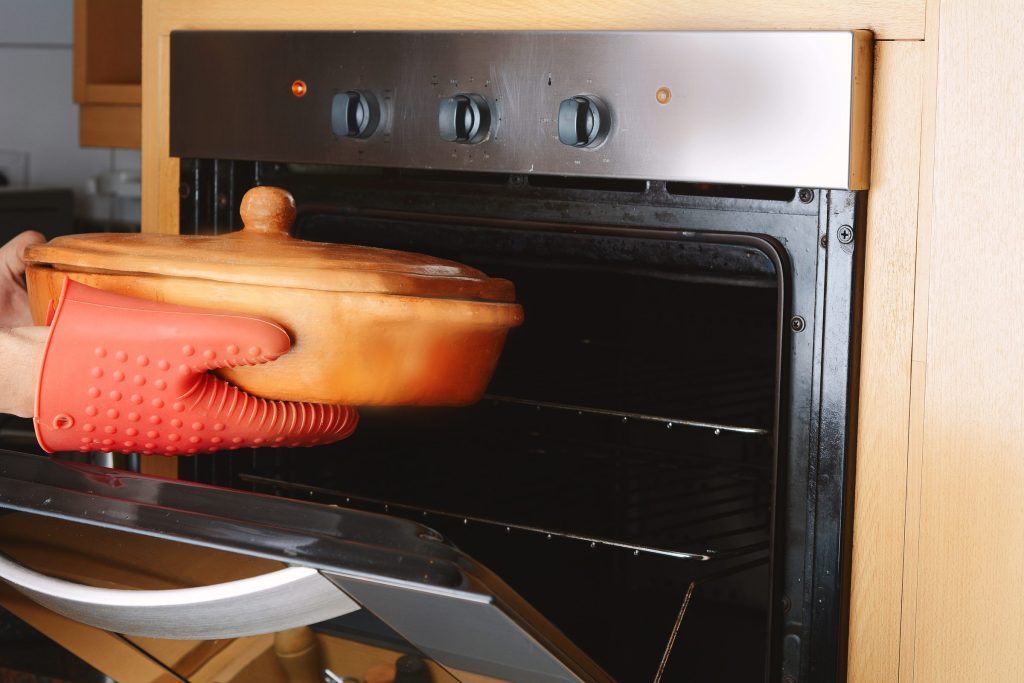
  • A gloved hand setting a covered dish onto the rack of a hot oven
    The cheapest part in the oven

    Meat probe not working

    PROBE ERROR on the display, or a probe reading nonsense. This is the least expensive thing that can be wrong with the appliance and it is worth eliminating before anything else.

    • PROBE ERROR on the display
    • A temperature that is obviously wrong
    • The message appearing with no probe in use
    What it usually means
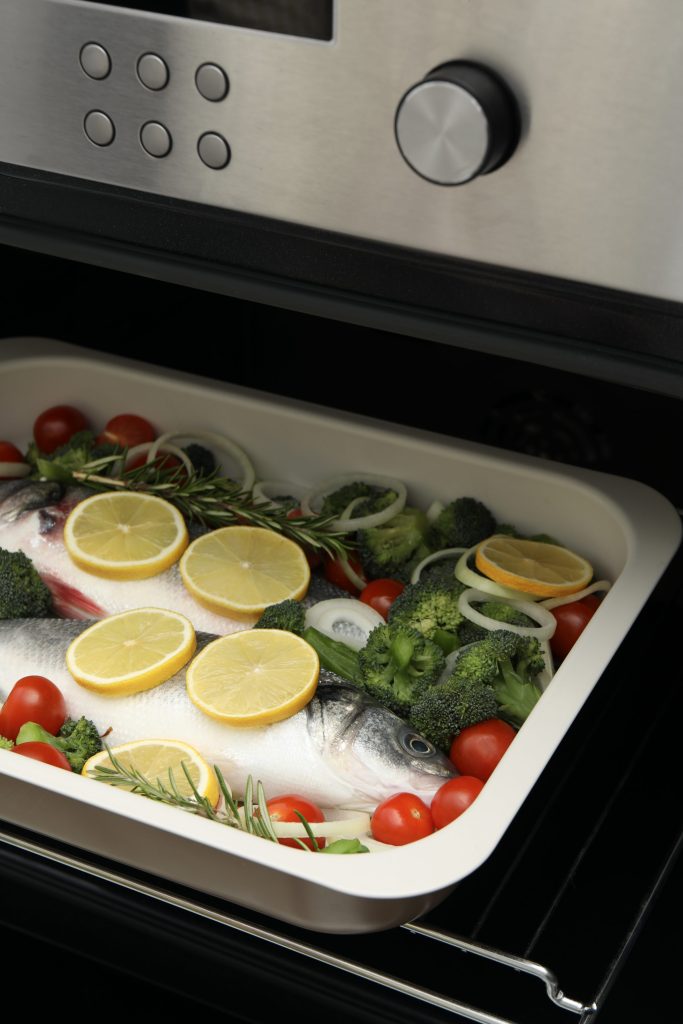
  • A tray of fish and vegetables in a built-in oven under a lit control panel
    Scale, in a city with hard water

    Steam oven not making steam

    A combi steam oven that heats and produces nothing, or produces steam for a few minutes and stops. In South Florida this is a water story far more often than an electrical one.

    • Heats but no steam at all
    • Steam for a few minutes then nothing
    • A tank that empties without producing anything
    What it usually means
  • Ice cubes and bubbles in clear water, close up
    Not a failure — an interval

    Steam oven asking to be descaled

    DESCALING IS NECESSARY on the display. This is the appliance doing exactly what it should, and it is one of the few messages on this site that costs nothing to resolve.

    • A descaling message on the display
    • Steam production slightly down
    • The message returning sooner than expected
    What it usually means
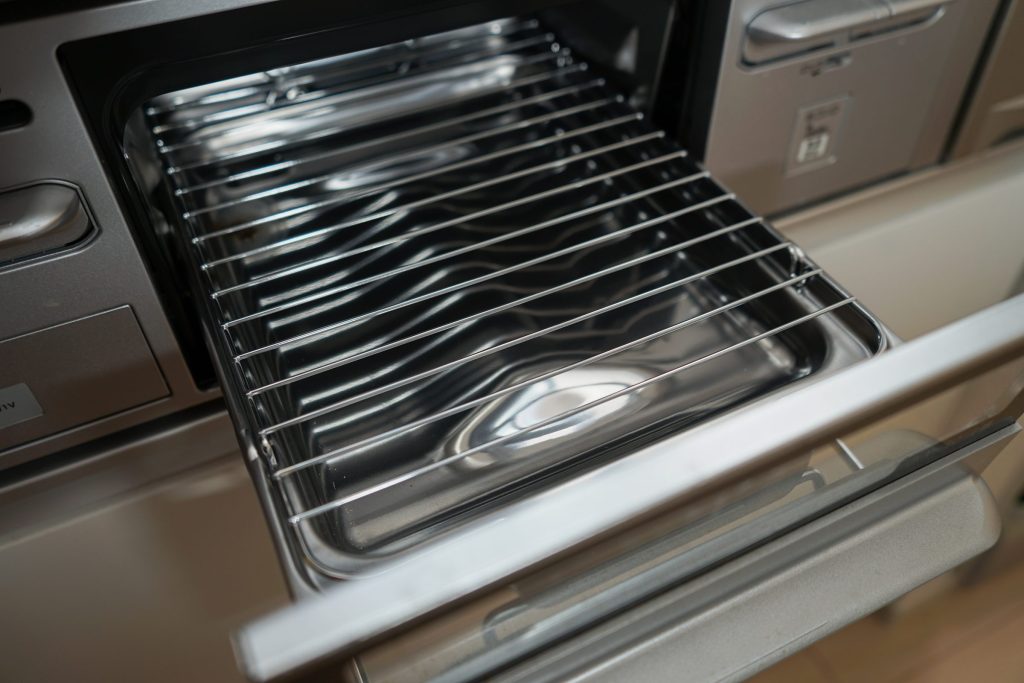
  • A broiler drawer pulled out of a range, its rack sitting over the drip pan
    Folded in under the oven

    Warming drawer not heating

    A warming drawer that stays cold, or one that runs at one temperature whatever it is set to. A contained appliance with a short list of things that go wrong.

    • Cold at every setting
    • One temperature regardless of the dial
    • A drawer that will not switch on at all
    What it usually means
  • A burner head lifted clear of a white gas cooktop, igniter and grates around it
    One zone, or all of them

    Cooktop not heating

    A zone that stays cold while the rest work, or a whole cooktop that lights up and never heats. On this make the answer depends entirely on which kind of top is in the counter.

    • One zone cold, the rest fine
    • Every zone cold with the panel lit
    • It heats for a moment and stops
    What it usually means
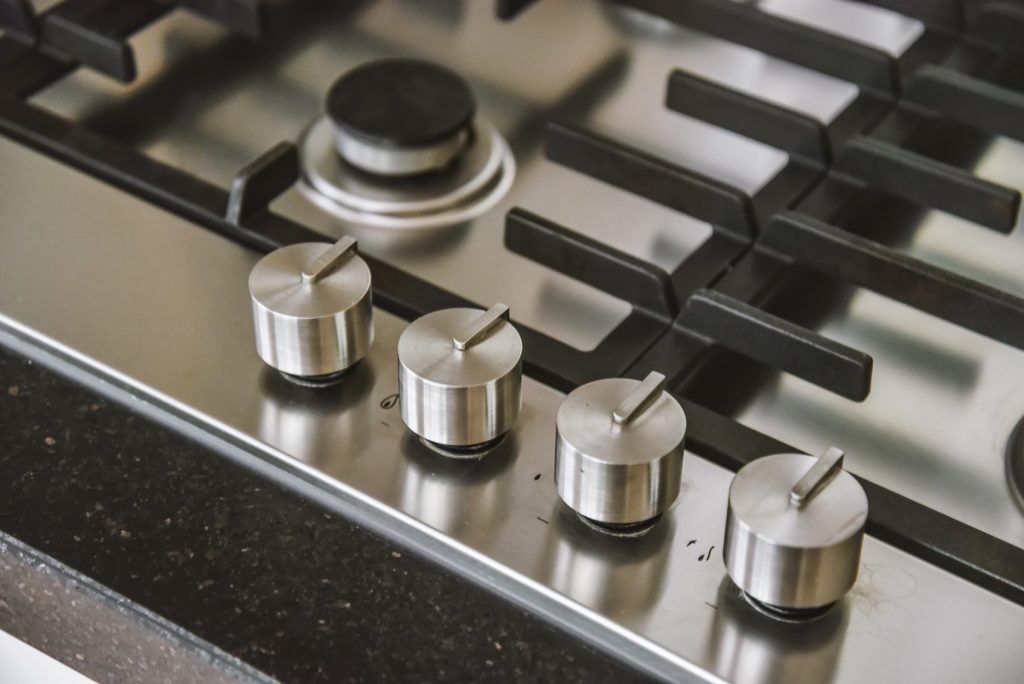
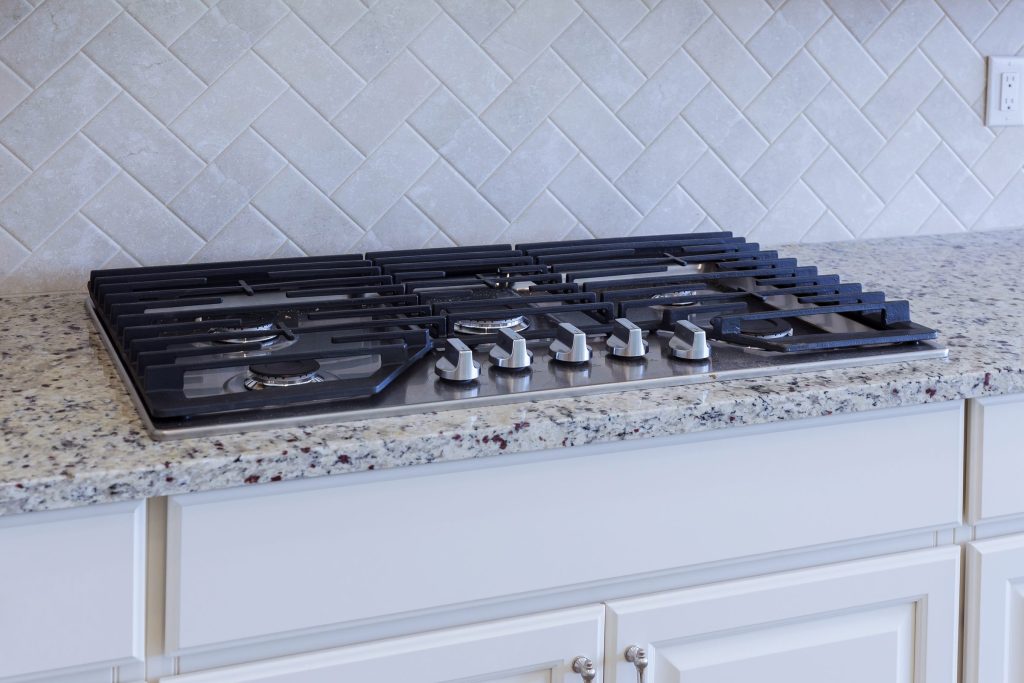
  • Stainless control knobs along the front edge of a gas cooktop set in dark stone
    Nothing at all, or nothing that lasts

    Cooktop will not turn on

    A cooktop that shows nothing when it is touched, or comes on and shuts itself down immediately. On the tops with a display this often arrives with a token that names the board rather than the elements.

    • No response to the power key at all
    • It powers up and shuts straight down
    • A token in the timer window at start-up
    What it usually means
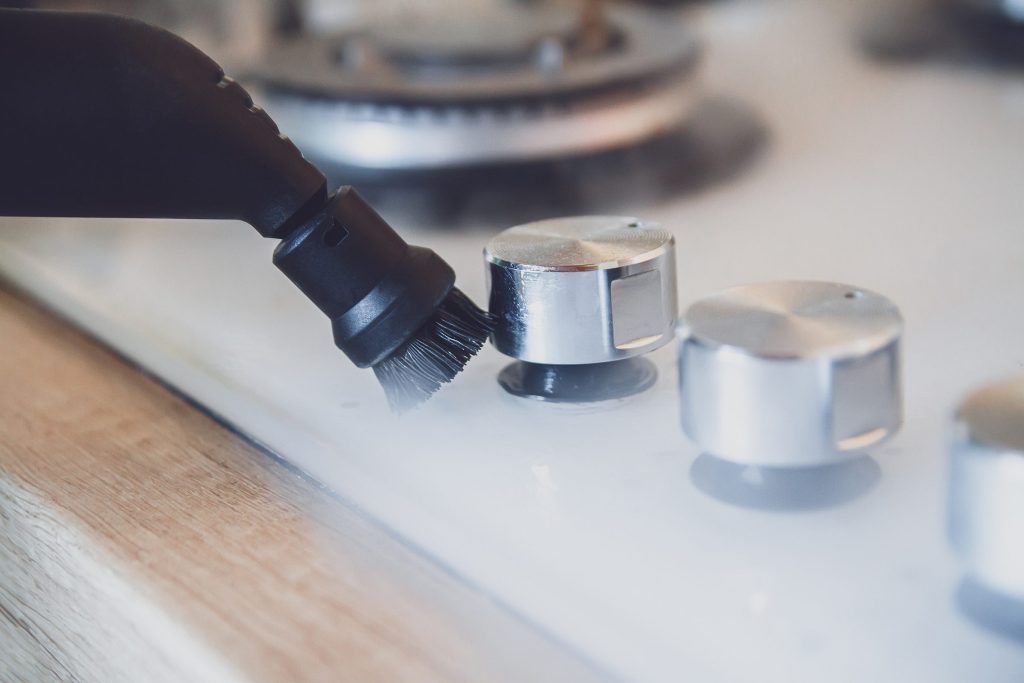
  • A brush head passing over the control knobs of a cooktop
    Often a spill, sometimes the sun

    Cooktop controls locked or unresponsive

    A touch panel that ignores you, or a cooktop that shuts every zone down and reports a key error. A large share of these are liquid, a cloth or direct sunlight, and every one of those is free to correct.

    • The panel does not respond to touch
    • A key error token in the timer window
    • It only happens at a particular time of day
    What it usually means
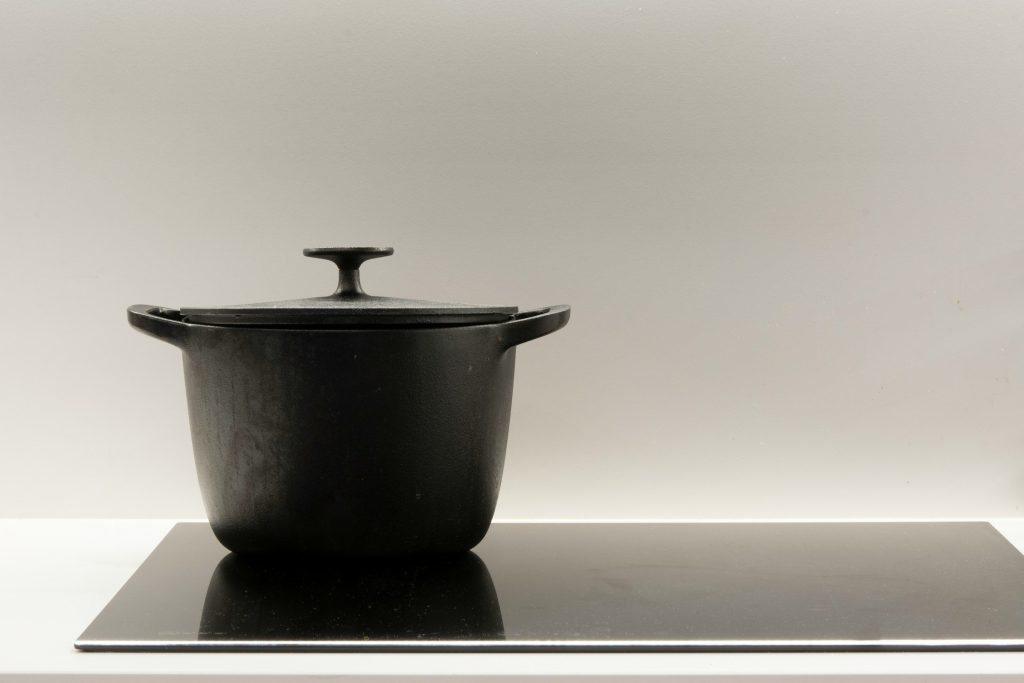
  • A black cast-iron casserole standing on an induction plate
    Usually heat, and usually the cabinet

    Cooktop zone shuts down mid-cook

    A zone that works and then stops part-way through cooking, sometimes with a flashing count and sometimes with nothing at all. On induction this is very often the electronics protecting themselves rather than failing.

    • It runs for a while and cuts out
    • Only at high power, or only in summer
    • A count of flashes with no display to read
    What it usually means
  • A pan resting on dark induction glass in a low-lit kitchen
    The cooktop is refusing, not failing

    Induction not recognizing the pan

    A zone that flashes, beeps or simply does nothing with a pan on it. Nine times out of ten this is the cookware, and a magnet settles it in five seconds without anybody being called.

    • The zone flashes with a pan in place
    • It works with some pans and not others
    • A smaller pan works and a larger one does not, or the reverse
    What it usually means
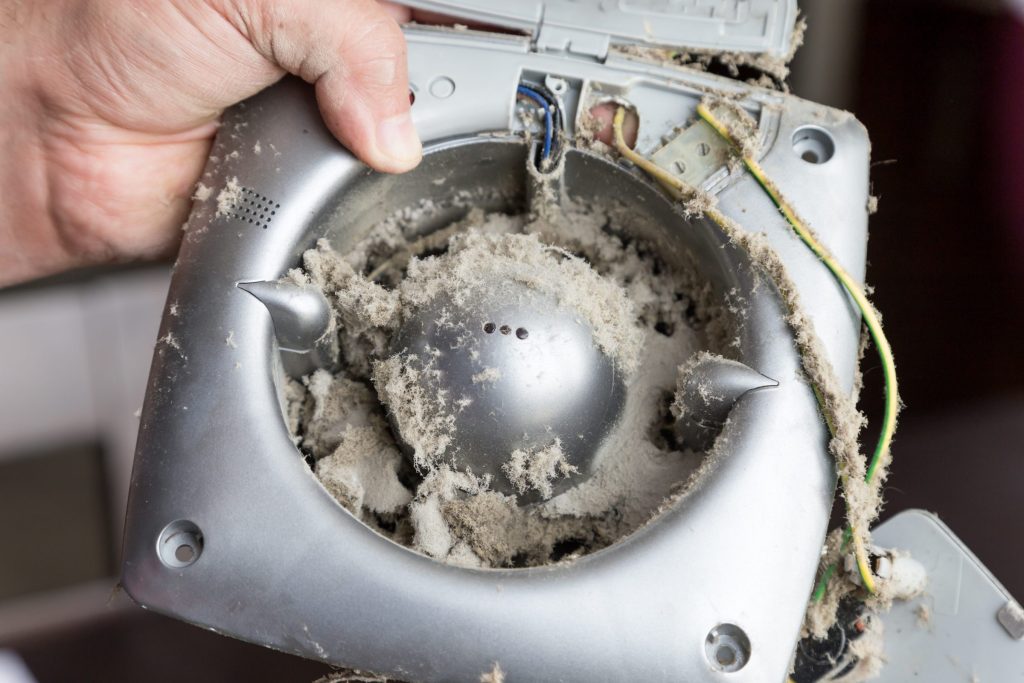
  • A blower wheel packed with dust and lint held in two hands
    A hum is better news than silence

    Range hood not extracting

    A hood that does nothing, hums without turning, or runs and moves no air. Three different repairs behind one complaint, and the cheapest of them is very common.

    • No response at all from any speed
    • A hum with no rotation
    • It runs but the kitchen still fills with steam
    What it usually means
  • A man lifting a mesh filter out of an island hood
    A separate circuit entirely

    Range hood lights not working

    Lamps that have gone out while the fan works perfectly, or lights that flicker. A separate circuit from the motor, and usually the least expensive call on this list.

    • One lamp out, the rest fine
    • All lamps out with the fan still working
    • Flickering, or lights that come on and drop out
    What it usually means
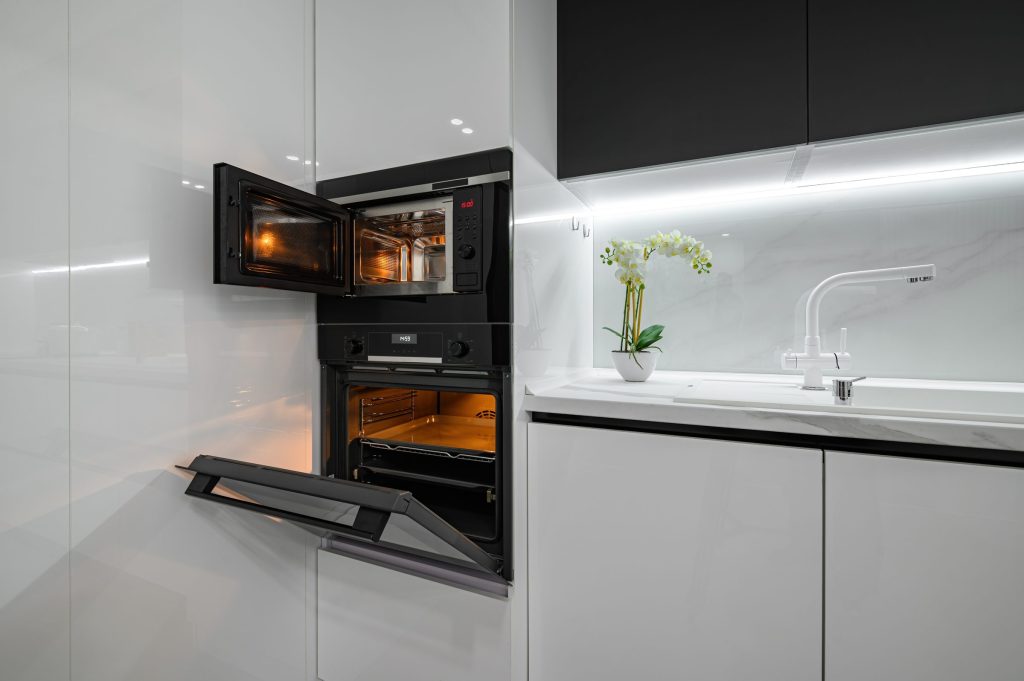
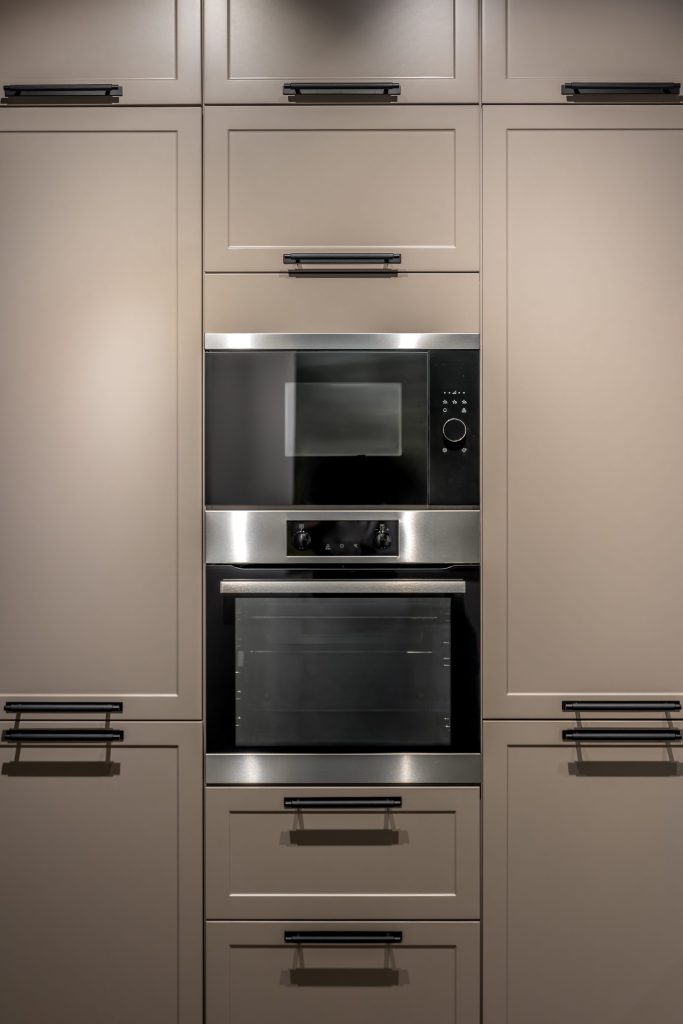
  • A built-in microwave standing open above a lit wall oven in a black and white kitchen
    Everything works except the cooking

    Microwave runs but does not heat

    The turntable turns, the light is on, the fan runs and the food stays cold. It is the most recognizable microwave failure and it usually points at one part of the appliance.

    • Everything runs and nothing gets warm
    • It heats weakly compared with before
    • Heating that has become intermittent
    What it usually means
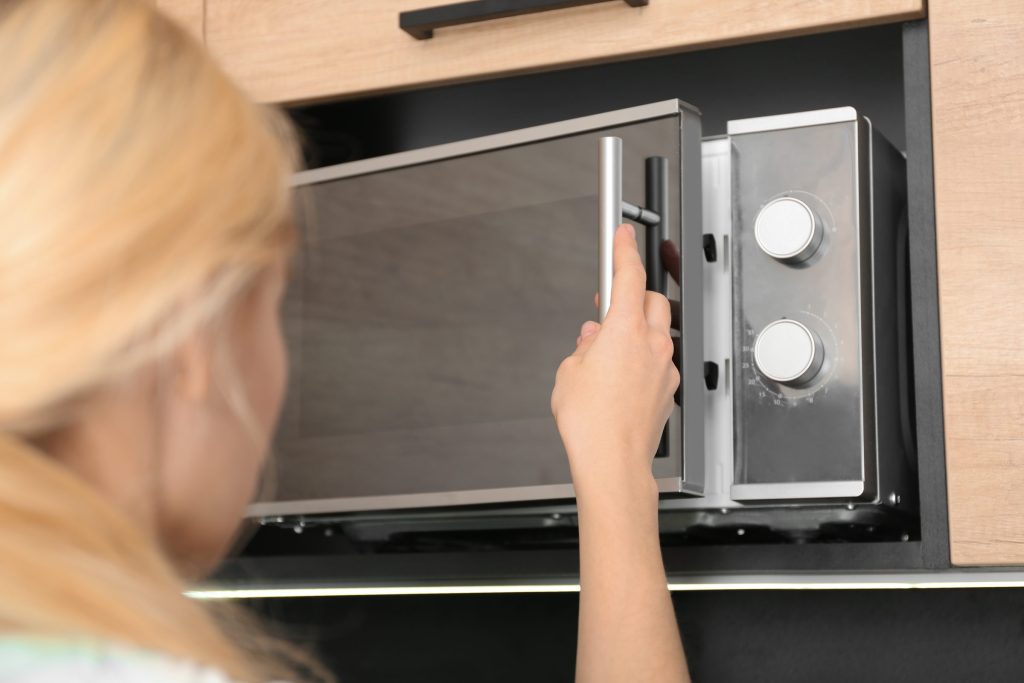
  • A woman opening the door of a microwave built into a low cabinet run
    The mechanism, not the cooking

    Microwave drawer will not open

    A DrawerMicro that will not slide out, opens part-way, or will not close again. It is a motorized mechanism a door microwave does not have, and it is the most common call on this appliance.

    • It will not open at all
    • It opens part-way and stops
    • It opens and will not close, so nothing will run
    What it usually means
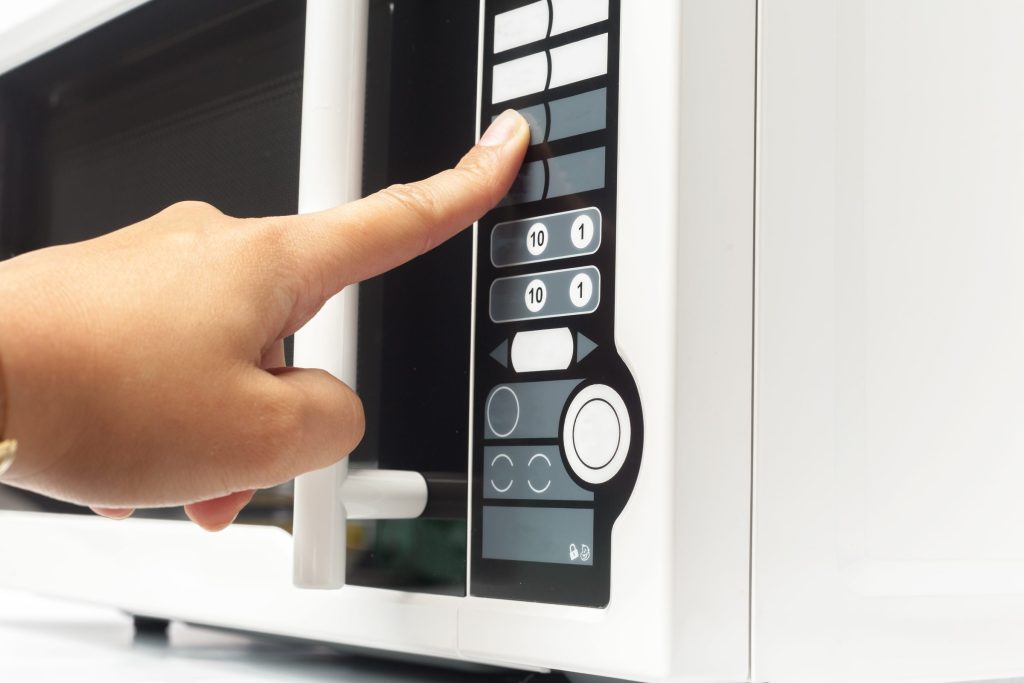
  • A finger pressing one of the membrane keys on a white microwave keypad
    SENSOR ERROR is usually not a problem

    Microwave controls behaving oddly

    Programs that stop early, a message about the sensor, or a panel that responds to the wrong key. On this make one of the common messages here is not a failure at all.

    • SENSOR ERROR during an automatic program
    • A program that stops before it should
    • Keys responding intermittently
    What it usually means
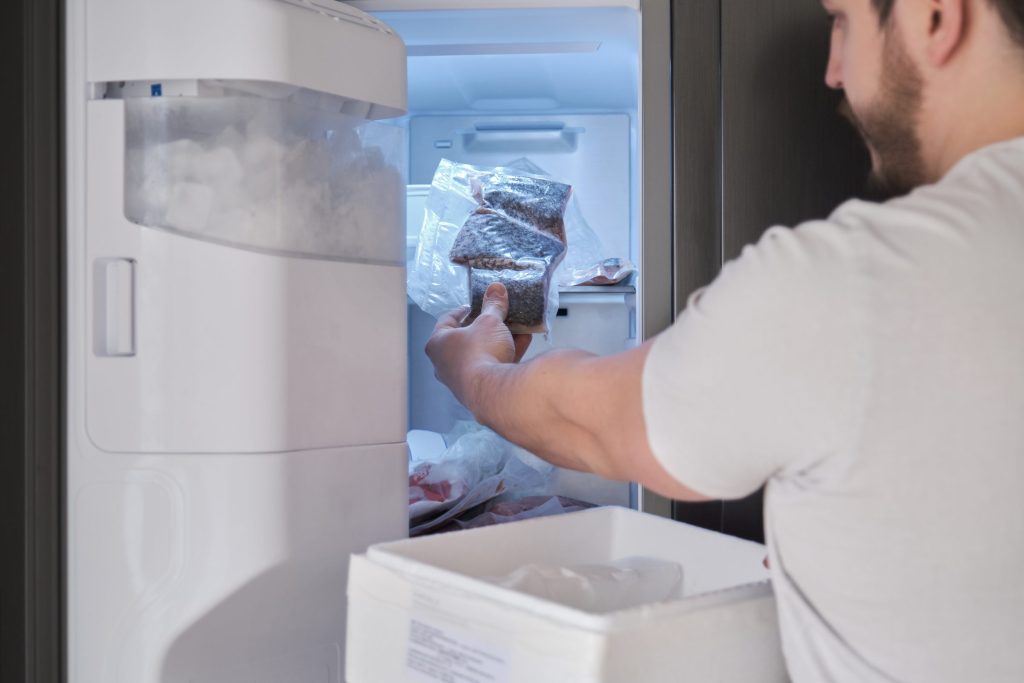
  • A man putting packaged food onto the shelves of an open refrigerator
    Start at the condenser, not the compressor

    Refrigerator not cooling

    A cabinet that is running and not getting cold, or getting cold and not staying there. Most of these are not the sealed system, and in this city the first thing to look at is the condenser.

    • Running constantly and still warm
    • Cold at first and warming through the day
    • A high temperature alarm or an E-code on the display
    What it usually means
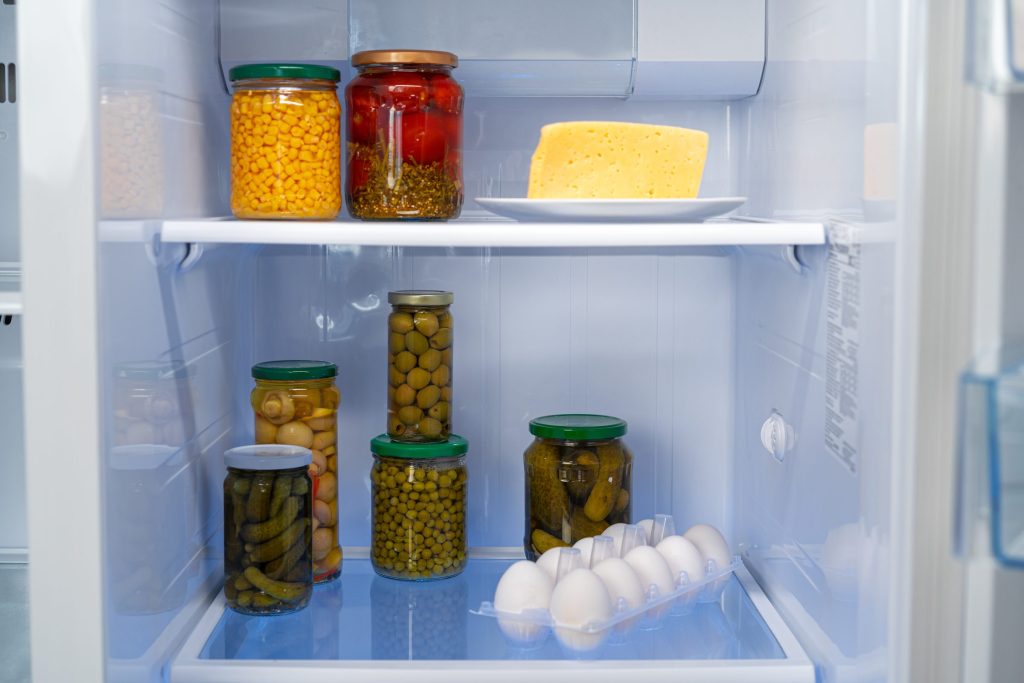
  • A refrigerator standing open on shelves of jars, cheese and eggs
    The door usually is open

    Door alarm keeps sounding

    An alarm that goes off with the door apparently shut. On tall paneled columns the door genuinely is not sealing far more often than the alarm is wrong, and it is the cheapest call on the appliance.

    • An alarm with the door looking closed
    • It sounds after a few minutes every time
    • An open-door message on an integrated cabinet
    What it usually means
  • Frost grown over the fins of an evaporator behind the back panel
    Defrost, and then the airflow it blocks

    Frost building up inside

    Ice at the back wall, on the evaporator cover, or around the drawers. It is a defrost condition, and left alone it eventually blocks the airflow and produces the warm-refrigerator call as well.

    • Ice on the back wall or the evaporator cover
    • Frost that returns after being cleared
    • One compartment warming while the other is fine
    What it usually means
  • A filter jug and a bottled drink on the shelf of an open refrigerator beside crisper baskets
    An interval, not a failure

    Filter or maintenance message showing

    A filter button turned blue, a CL on the display, a bulb indicator or a condenser reminder. All of these are the appliance asking for maintenance rather than reporting a problem.
    • A filter indicator that has come on
    • CL flashing on the temperature display
    • A message asking for the condenser to be checked
    What it usually means
  • An open refrigerator with fruit, a jug of juice and a full door shelf
    Which noise, and when

    Refrigerator making a new noise

    Buzzing, clicking, rattling or a hum that has changed. Some of it is normal and some of it is a fan telling you it is on its way, and the difference is usually in when the noise happens.
    • A rattle or buzz that comes and goes
    • A hum that is louder than it used to be
    • Clicking every few minutes
    What it usually means
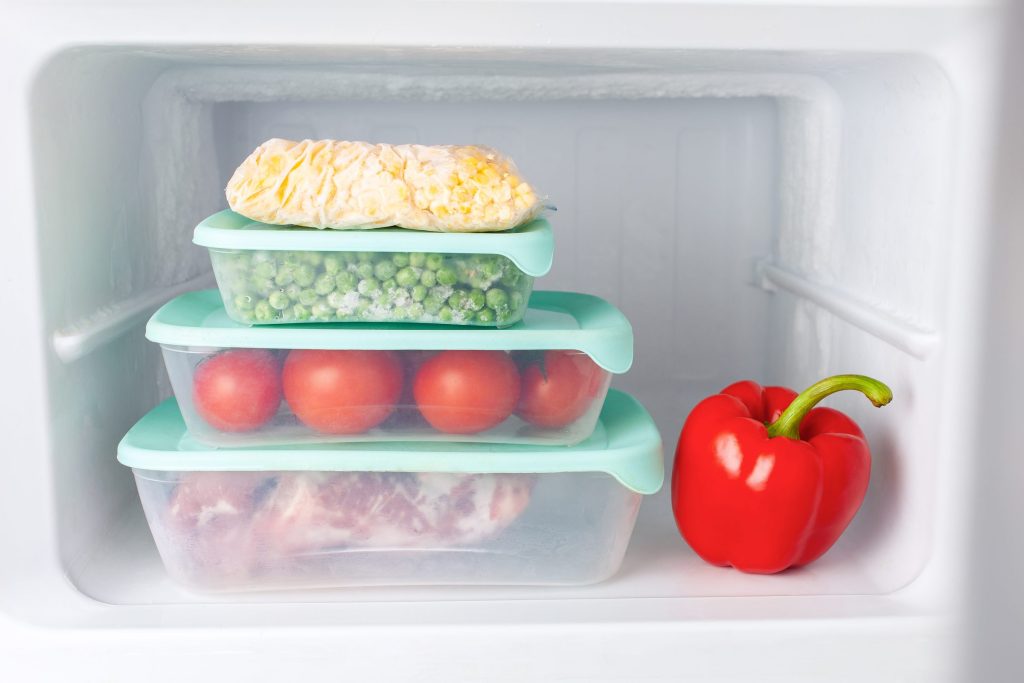
  • Stacked containers of frozen vegetables and meat in a white freezer compartment
    On this make, it may be its own appliance

    Freezer not freezing

    A freezer that is soft rather than solid, or a column that has warmed while the refrigerator beside it is perfect. On this make those two cabinets are frequently two separate machines.

    • Ice cream soft, everything else still frozen
    • A whole column warm while the one next to it is fine
    • Frost gone from the walls, which is a warning sign
    What it usually means
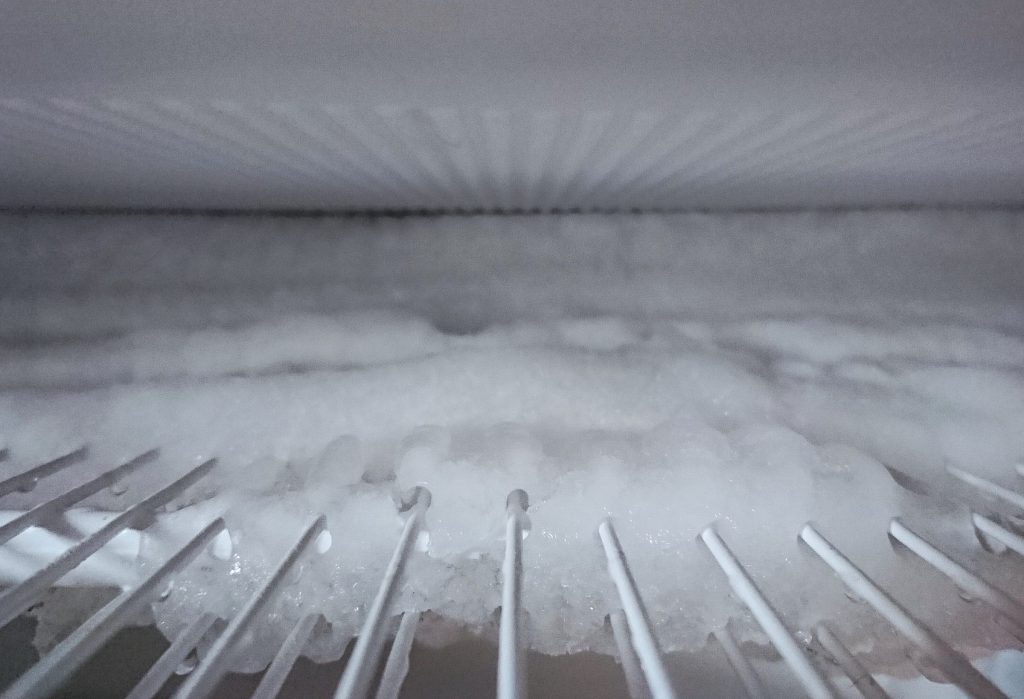
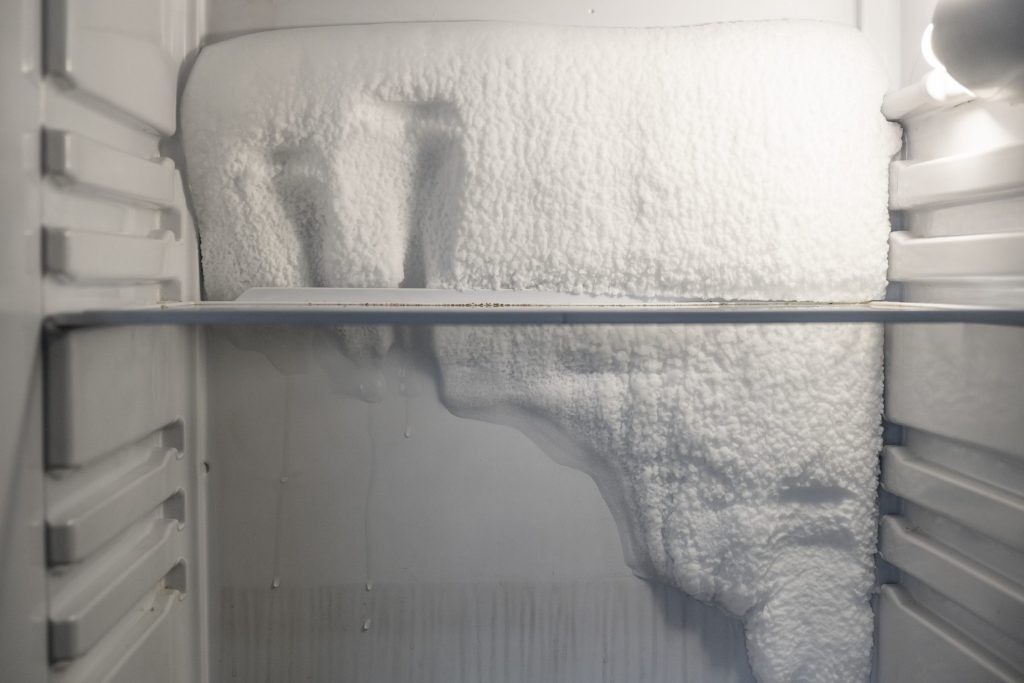
  • A thick slab of frost grown across the back wall and shelf of a freezer
    Where the ice is, is the answer

    Freezer icing up

    Ice on the walls, ice around the drawers, or a solid sheet across the evaporator cover. Frost in a freezer is normal in small amounts and diagnostic in large ones.

    • Ice that returns after being cleared
    • Drawers that will not close
    • A sheet of ice behind the rear panel
    What it usually means
  • A woman reading the label of a bottle taken from a wine cabinet
    A glass door is a real thermal load

    Wine cellar not cooling

    A cabinet running warm, or running and never reaching its set point. In a kitchen where the air conditioning goes off during the day, a glass door changes the arithmetic considerably.

    • Warmer than the set point all day
    • Cooling at night and not in the afternoon
    • An E-code on the display
    What it usually means
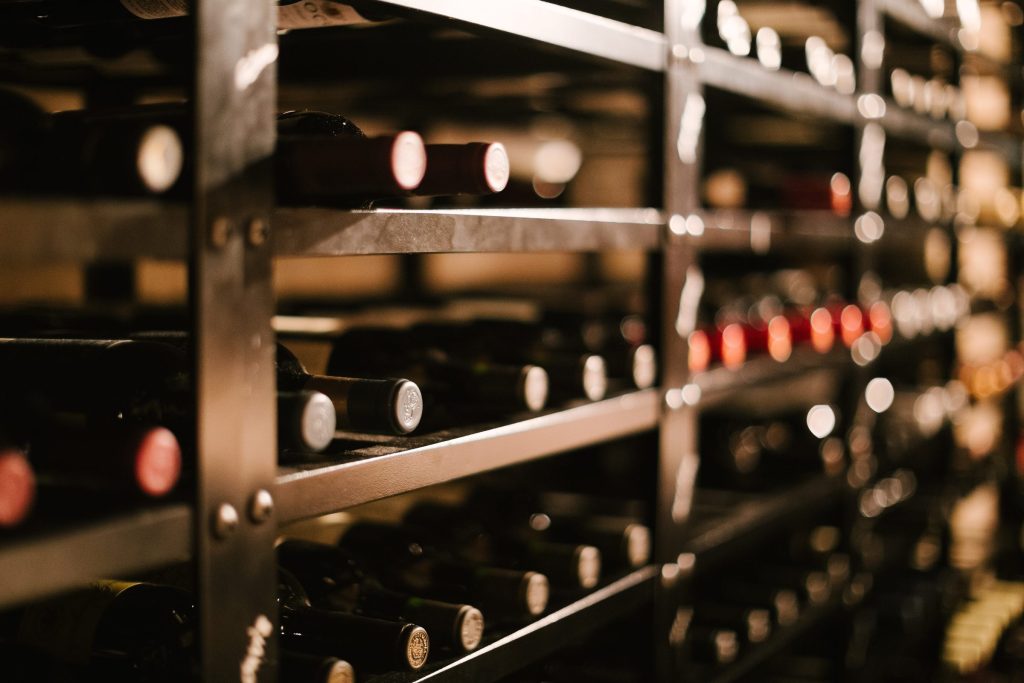
  • Rows of bottles lying on the lit shelves of a wine store
    On a two-zone cabinet, which zone matters

    Wine cellar temperature wrong or swinging

    One zone right and the other not, or a temperature that will not sit still. Stability matters more than the number here, and on a dual-zone cabinet the code means something different from what it means anywhere else on this make.

    • One zone correct, the other several degrees out
    • A temperature that swings through the day
    • A display flashing an E-number
    What it usually means
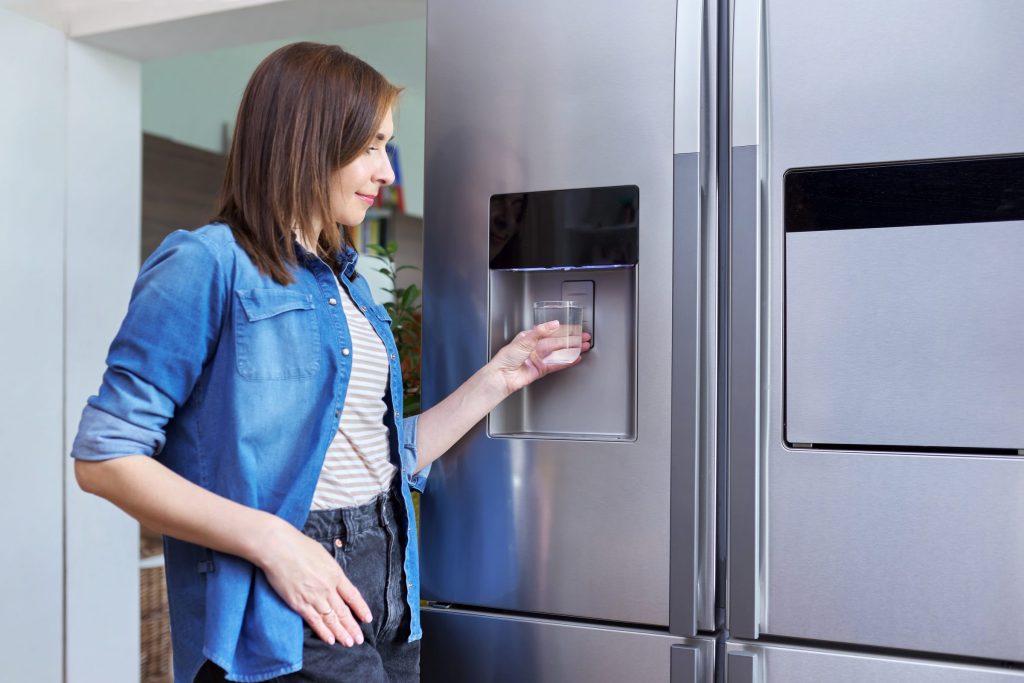
  • A woman holding a glass under the door dispenser of a stainless refrigerator
    Water in, water out, and scale

    Ice machine not making ice

    A machine that runs and produces nothing, or produces far less than it used to. This maker publishes no code for any ice machine, so it is diagnosed entirely from what it does.

    • Running with an empty bin
    • Production down noticeably
    • Ice that forms and never releases
    What it usually means
  • A clear puddle spreading across a pale wood floor, darkening the boards it has soaked into
    Start at the drain, every time

    Water under the ice machine

    Water on the floor of the cabinet or under the kickplate. On this equipment the drain is required rather than optional, and it is where most of these end.

    • Water pooling under the unit
    • A damp cabinet base with no obvious source
    • Water only after a harvest cycle
    What it usually means
  • A glass of water with a large clear ice cube beside it on a dark surface
    Usually the bin, not the machine

    Ice tastes or smells wrong

    Ice that smells of the freezer, tastes of the water, or has taken on something from the kitchen. It is rarely a mechanical problem and it is usually free to resolve.

    • A musty or stale smell to the ice
    • A taste that appeared after a quiet month
    • Cloudy ice as well as an odor
    What it usually means
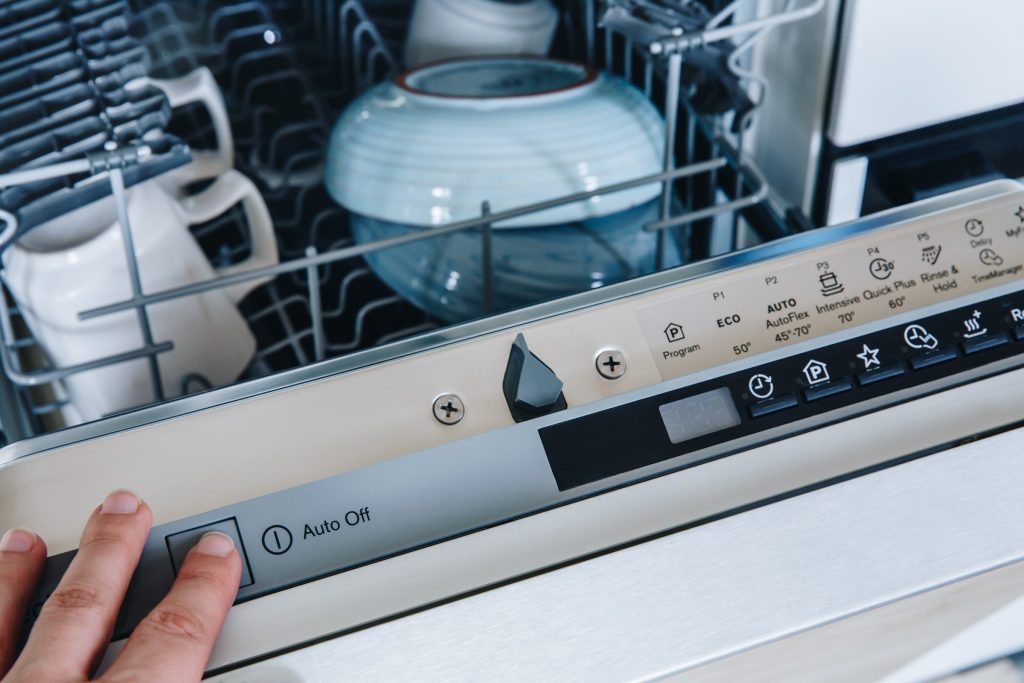
  • A hand at the control strip of an open dishwasher, the cycle buttons in a row along the door edge
    Count them — the pair is the message

    Dishwasher lights flashing

    A Viking dishwasher has no error code. Two lights on the front flash a count each, and the pair of counts is the entire diagnostic vocabulary of the appliance.

    • Cycle buttons flashing rather than lit
    • Two lights flashing different counts
    • Both lights flashing continuously
    What it usually means
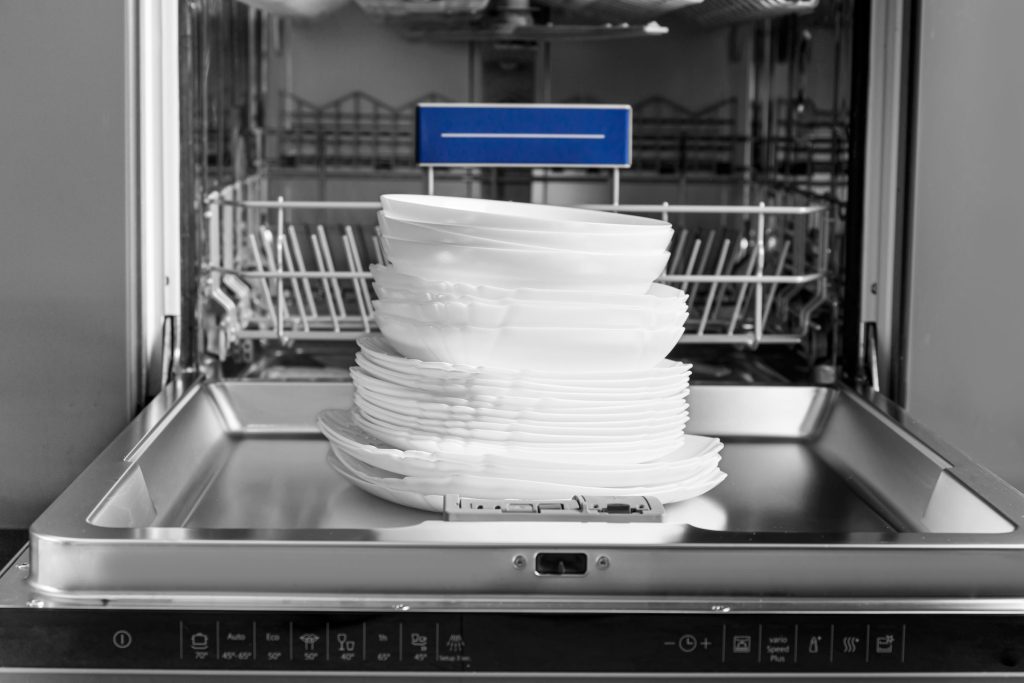
  • A stack of plates standing on the lowered door of a dishwasher
    Usually the plumbing, not the machine

    Dishwasher not draining

    Water standing in the bottom at the end of a cycle. Six things are worth checking before anybody is called, and between them they resolve most of these.

    • Water in the bottom after a cycle
    • One flash then five on the front lights
    • It drains slowly rather than not at all
    What it usually means
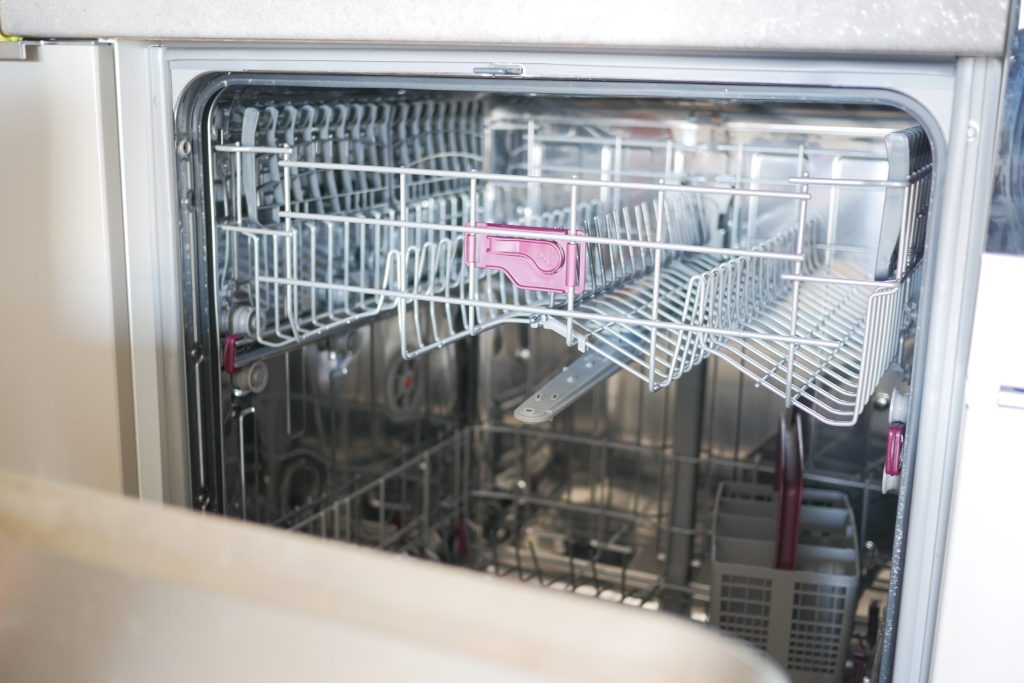
  • The silver racks of a dishwasher seen through its open door
    Three checks outside the machine

    Dishwasher not filling

    A machine that runs a cycle without water, or fills far more slowly than it should. Like the drain, most of this is outside the appliance.

    • A cycle running with no water
    • Two flashes then two on the front lights
    • Filling much more slowly than it used to
    What it usually means
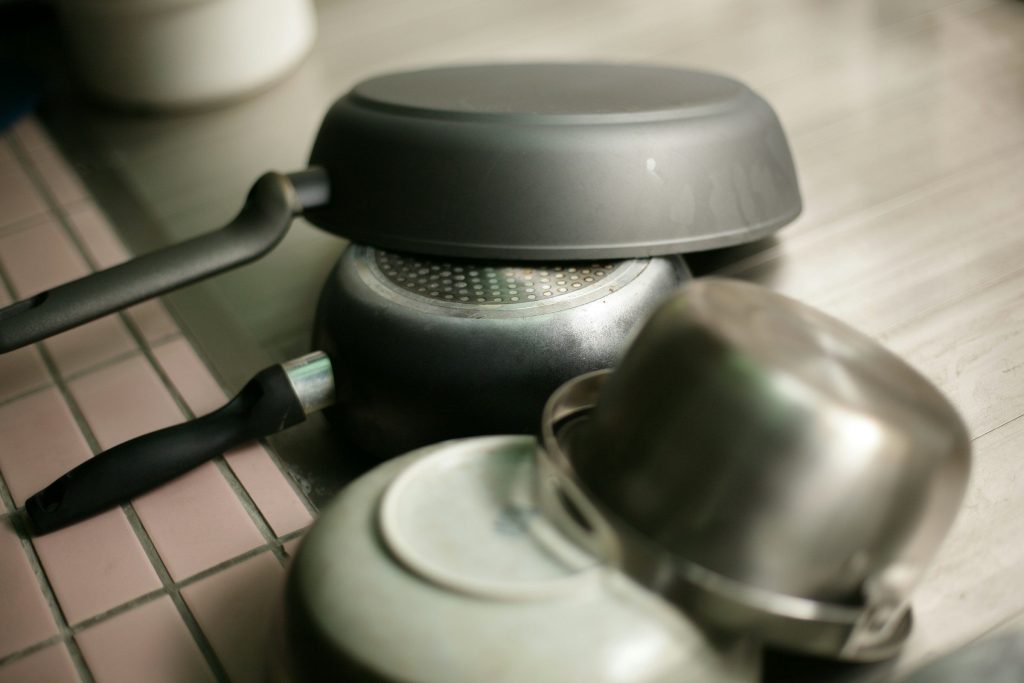
  • Pans and lids stacked upside down on a tiled counter
    Door, latch, and the four-second reset

    Dishwasher will not start

    A machine that does nothing when the cycle is selected, or starts and stops immediately. Two of the causes are free to check and one of them is a habit rather than a malfunction.

    • Nothing happens when START is pressed
    • The start light blinks and nothing runs
    • It runs for a moment and stops
    What it usually means
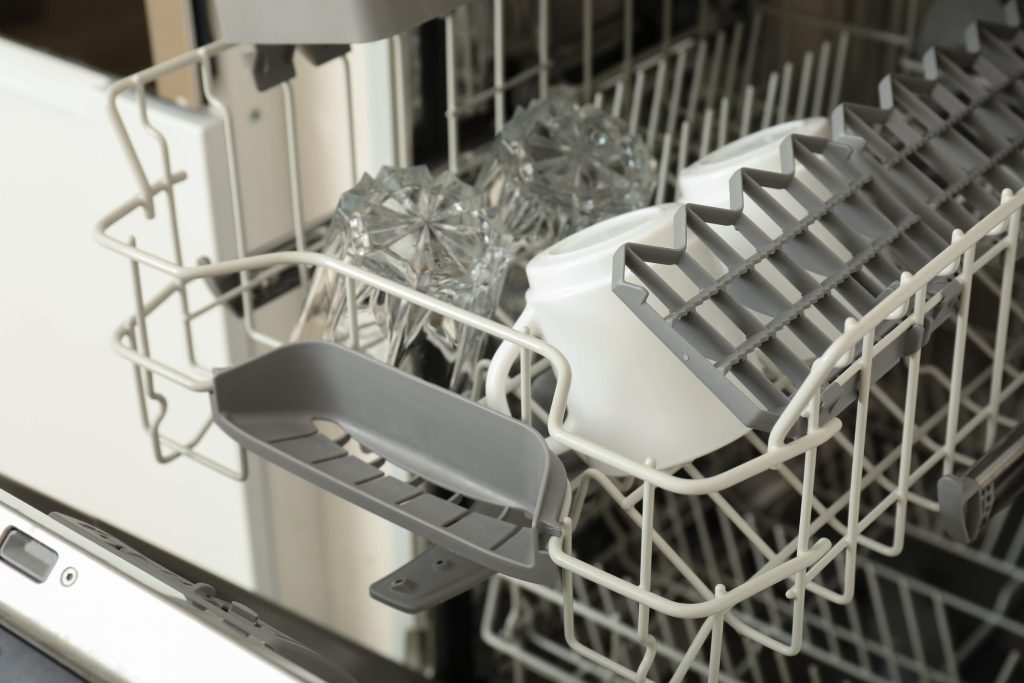
  • Glasses and a jug standing upturned in the upper basket of a dishwasher
    Rinse aid, plastics, and the sanitize light

    Dishes coming out wet

    Dishes that are clean and wet, or plastics that never dry while everything else does. Some of this is how modern dishwashers work and some of it is a real condition.

    • Everything wet at the end of a cycle
    • Plastics wet while china is dry
    • The sanitize indicator not lighting
    What it usually means
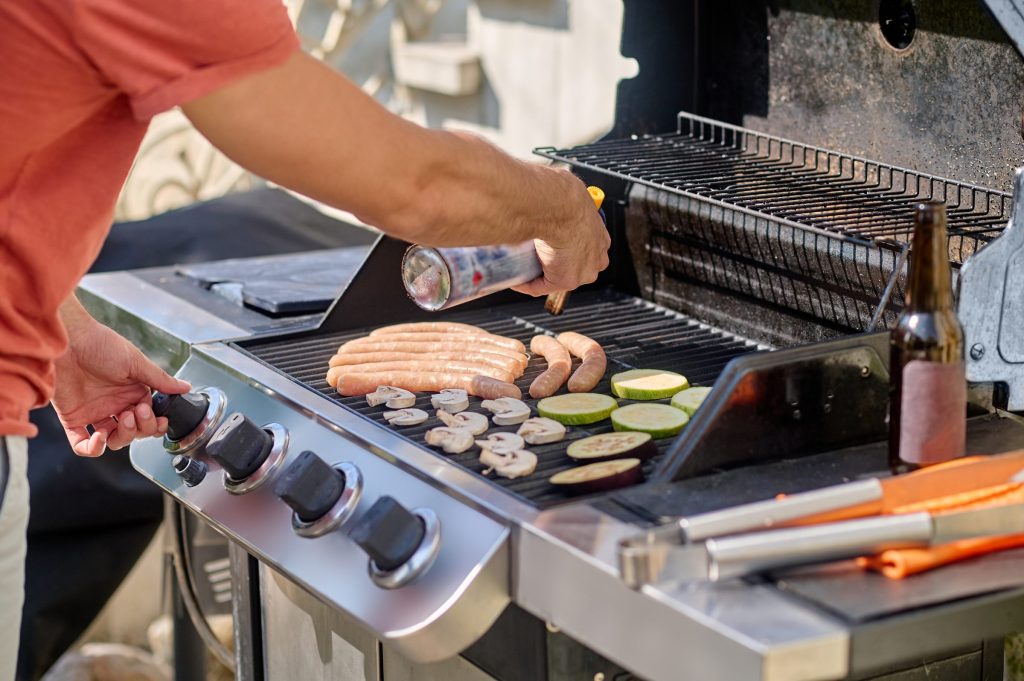
  • A hand at the control knobs of a stainless outdoor grill, food on the grates behind
    Ignition is a wear part out here

    Grill burner will not light

    A built-in grill that clicks and does not catch, or lights on one burner and not another. It publishes no code of any kind, and in salt air the ignition hardware is a consumable.

    • Clicking with no ignition
    • One burner lighting, another not
    • It lit at the start of the season and not now
    What it usually means
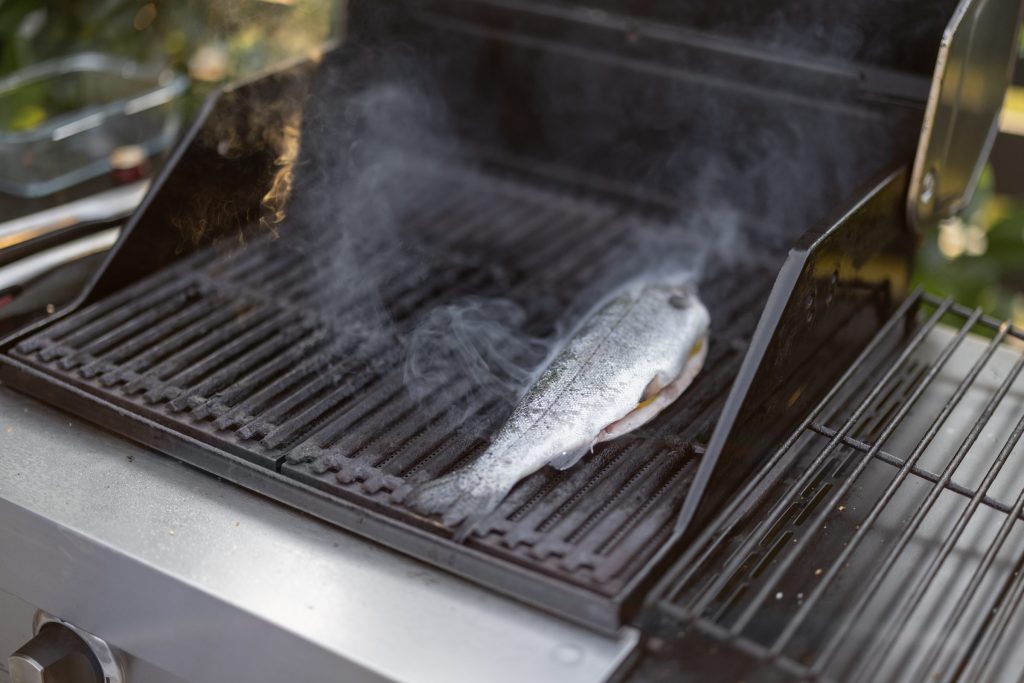
  • A fish steaming on one side of a grill's grates while the other side sits empty
    Usually a tube not carrying its length

    Grill heating unevenly

    One end hot and the other cold, or a grill that will not reach the temperature it used to. On a built-in with several burners the pattern is the diagnosis.

    • One zone cold or much cooler
    • It will not reach searing temperature any more
    • Flames uneven along a burner tube
    What it usually means
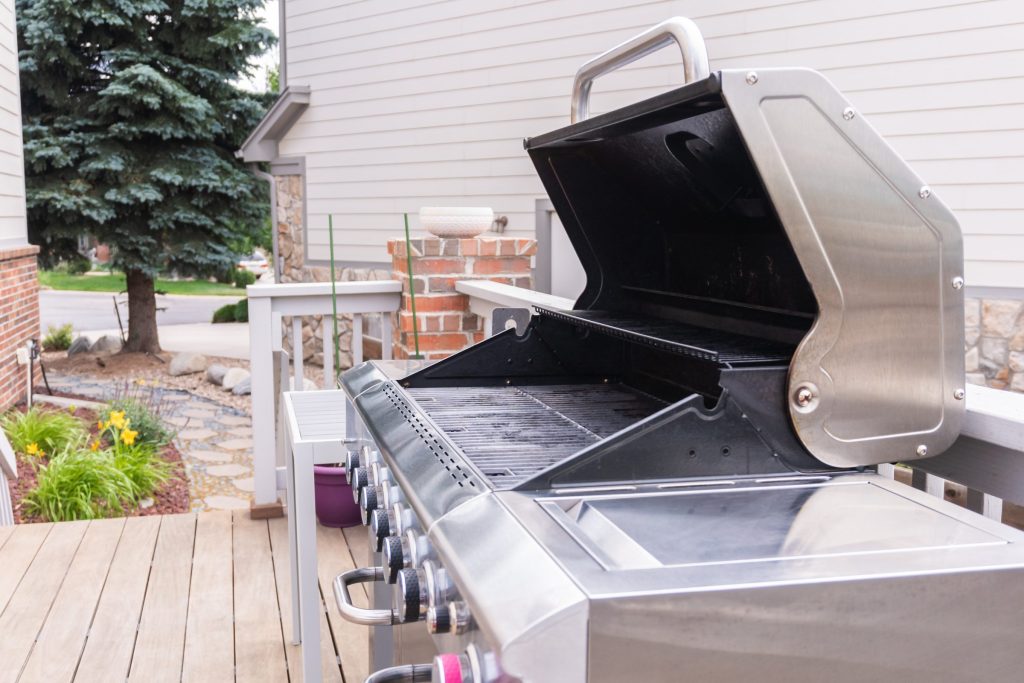
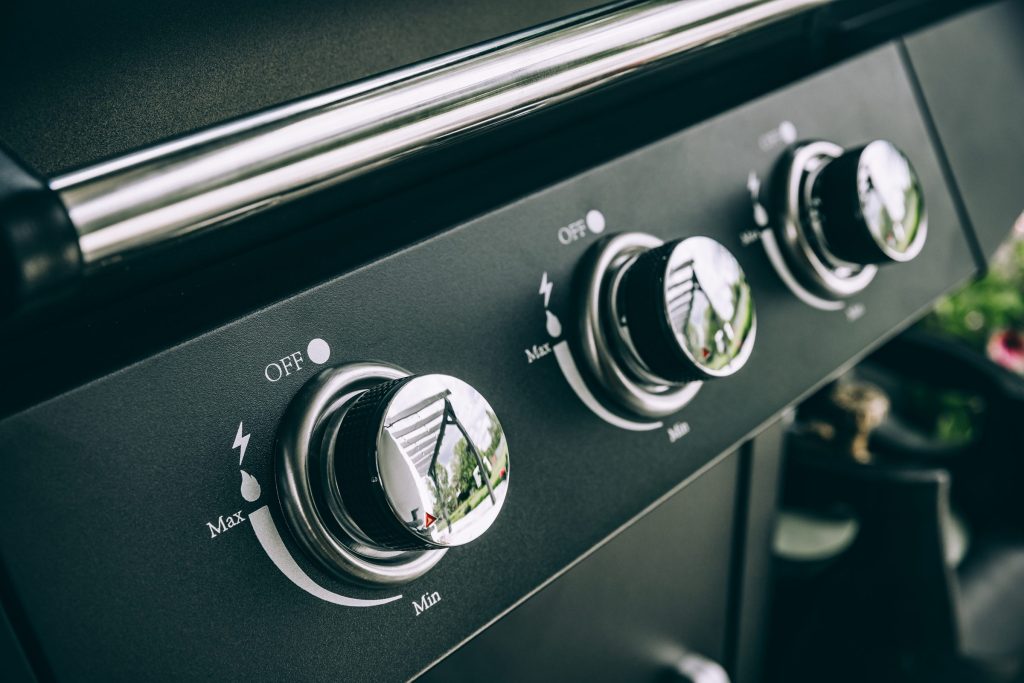
  • A stainless outdoor gas grill on a deck with the lid raised — burner tubes, grates and the row of control knobs along the front
    The maker says to expect it here

    Rust on a stainless grill

    Surface rust on stainless steel outdoors near the ocean is something this manufacturer warns about in its own FAQ. On this coast it is the address rather than a defect, and it is not usually a repair.

    • Orange speckling on stainless panels
    • Rust appearing within the first year
    • Marks that come back after being cleaned off
    What it usually means

Eight of these are here to save you a visit

Some of what looks like a problem is not one.

A pan that is not induction cookware. A cooling fan running on after the oven is off, exactly as it should. A refrigerator asking for its filter. CL on a display, which is a request to clean the coils. Ice that smells of the bin rather than the machine. Surface rust the manufacturer itself says to expect on this coastline. A dishwasher whose disposal plug was never knocked out. A steam oven asking to be descaled.

Every one of those has a page here that says so plainly, before you have paid anybody to come out and tell you. On a site whose purpose is to get the phone to ring, that is a deliberate cost, and it is the right one.

What each repair costs
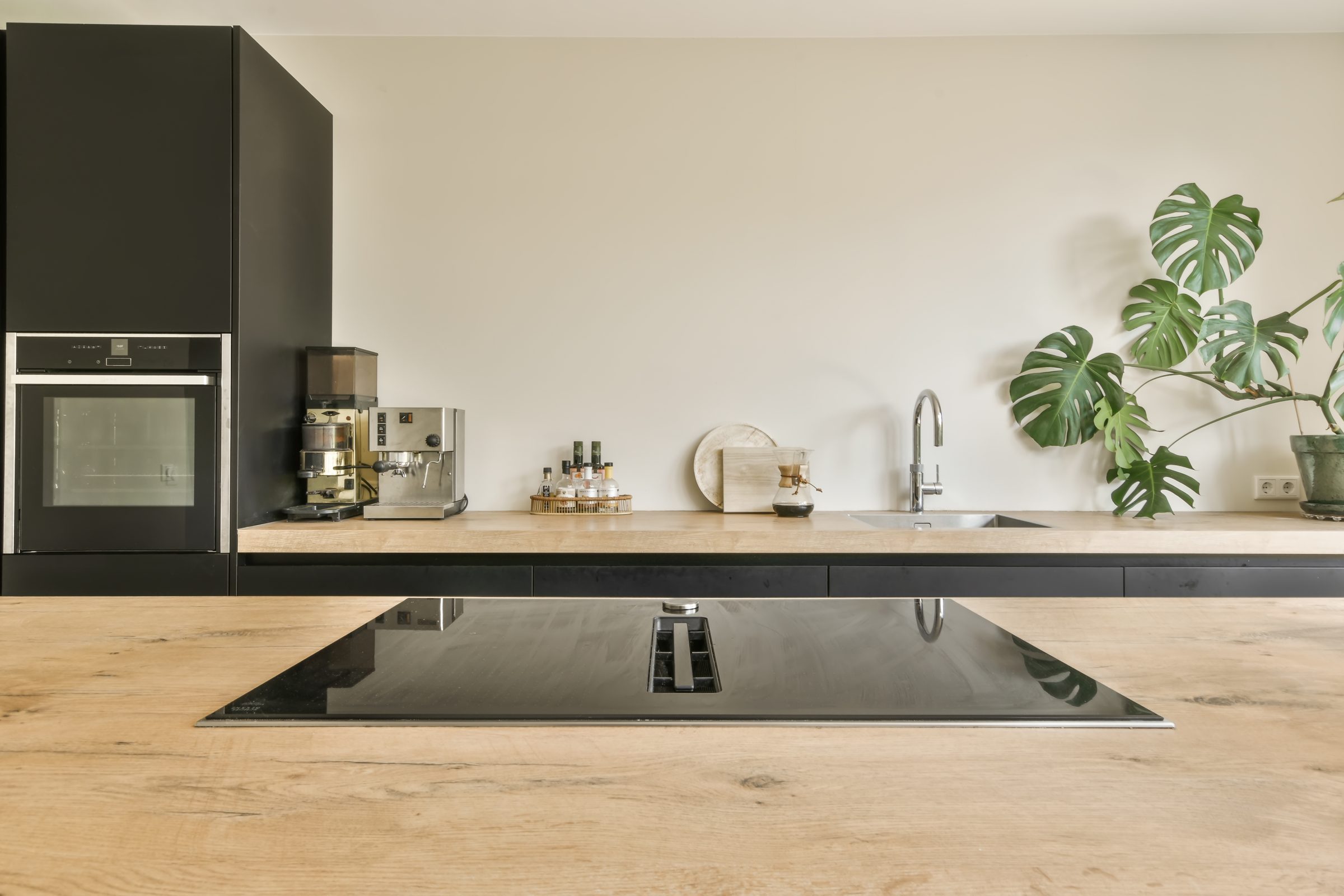
A white counter with an induction hob under a long window

Nothing on the display?

On most of this equipment there is nothing to read.

The grills publish no code. Neither do the ice machines, the hoods, or any gas burner this maker has ever built. The dishwashers flash two lights and the current ranges turn a knob ring red and flash a count nobody publishes. That is not a gap in this site — it is how this equipment reports, and every page here is written for it.

Tell us the model number and exactly what the appliance is doing, and we can usually tell you what it is before anyone comes out. Call (305) 697-3843, or describe it in the form above.

If there is something on the display

Eighty-four conditions, decoded

Where this maker does publish something — an F with a letter, an E-number, a two-letter alarm, a message in words — every one of them has a page with what it covers and what to check first.

  • Viking cooktop error code FA

    Viking cooktop error code FA: the manufacturer publishes this for a key error. What the code covers, what to check before you book, and why the same token means something else on another Viking machine.

    What this one means
  • Viking cooktop error code FE

    Viking cooktop error code FE: the manufacturer publishes this for a temperature sensor failure. What the code covers, what to check before you book, and why the same token means something else on another Viking machine.

    What this one means
  • Viking cooktop error code Fc

    Viking cooktop error code Fc: the manufacturer publishes this for an over-temperature condition. What the code covers, what to check before you book, and why the same token means something else on another Viking machine.

    What this one means
  • Viking cooktop error code Fr

    Viking cooktop error code Fr: the manufacturer publishes this for a relay error. What the code covers, what to check before you book, and why the same token means something else on another Viking machine.

    What this one means
  • Viking cooktop error code FH

    Viking cooktop error code FH: the manufacturer publishes this for a control error in the EEPROM. What the code covers, what to check before you book, and why the same token means something else on another Viking machine.

    What this one means
  • Viking cooktop error code FJ

    Viking cooktop error code FJ: the manufacturer publishes this for a key error. What the code covers, what to check before you book, and why the same token means something else on another Viking machine.

    What this one means
  • Viking cooktop error code FO

    Viking cooktop error code FO: the manufacturer publishes this for a software error. What the code covers, what to check before you book, and why the same token means something else on another Viking machine.

    What this one means
  • Viking cooktop error code FL

    Viking cooktop error code FL: the manufacturer publishes this for a keyboard error caused by ambient light. What the code covers, what to check before you book, and why the same token means something else on another Viking machine.

    What this one means
  • Viking cooktop error code FU

    Viking cooktop error code FU: the manufacturer publishes this for a key error. What the code covers, what to check before you book, and why the same token means something else on another Viking machine.

    What this one means

Describe it in your own words.

You do not need to know which part it is. What it does, when it started, and the model number are enough for us to say what is likely and what it should cost.

This article is based on:

  • Official manufacturer documentation
  • Internal repair procedures
  • Technician repair history
  • Company quality standards
Call (305) 697-3843