Cost Expectations
Range Hood Motor Replacement Cost — and Why It Is Usually the Capacitor
Range hood motor replacement cost runs roughly $250 to $550 fitted, but a hood that hums without turning is usually a capacitor rather than a motor, and that is $120 to $250 — a fraction of what people expect. What moves the labor most is where the ventilator actually is: inside the hood, in the ceiling, or remote on the roof. That is not visible from the kitchen and it is worth establishing before booking.
The full guide
Range hood motor replacement cost starts with the free test
Take the filters out and run the hood. If the airflow is transformed, the answer was grease and there is nothing to buy. Over an open-burner professional range that is a real and frequent finding, because that burner throws considerably more into a hood than the cooktop it replaced.
Then the cheap answer
A motor that hums and does not turn is very often a capacitor. It is a small component, it fails on its own schedule after years of running, and it is a fraction of the motor everybody has braced themselves for.
A motor that does nothing at all — no hum, no attempt — points somewhere different: the switch, the control, or the supply. Check whether the lamps still work, because lamps are a separate circuit and they tell you whether the hood has power at all.
What the actual motor costs
$250 to $550 fitted, and the spread is almost entirely labor rather than the part.
Where the ventilator lives decides it, and it is not visible from the kitchen:
| Where it is | What it means |
|---|---|
| Inside the hood | The straightforward case, and the quietest to work on |
| In the ceiling | An access panel, or one made |
| Remote on the roof | A different job entirely, and worth knowing before booking |
A quiet hood that moves a great deal of air usually has a remote blower. If yours is like that, say so when you call — it changes the visit rather than the price of the part.
The one that runs and moves nothing
A hood can be working perfectly and extracting nothing, and there are two reasons:
- Grease in the blower housing, past the filters, which is what happens when filters go unwashed.
- A damper stuck shut, at the hood or at the roof cap.
Salt air seizes a damper at the far end of a remote duct, and it fails silently while the hood goes on making all the right noises. It is one of the few genuinely coastal failures on the cooking half of a kitchen, and it is why "it sounds fine" is not evidence.
Why a hood motor fails, and why it is rarely only the motor
A blower that has died usually died of something, and the something matters for what the repair costs:
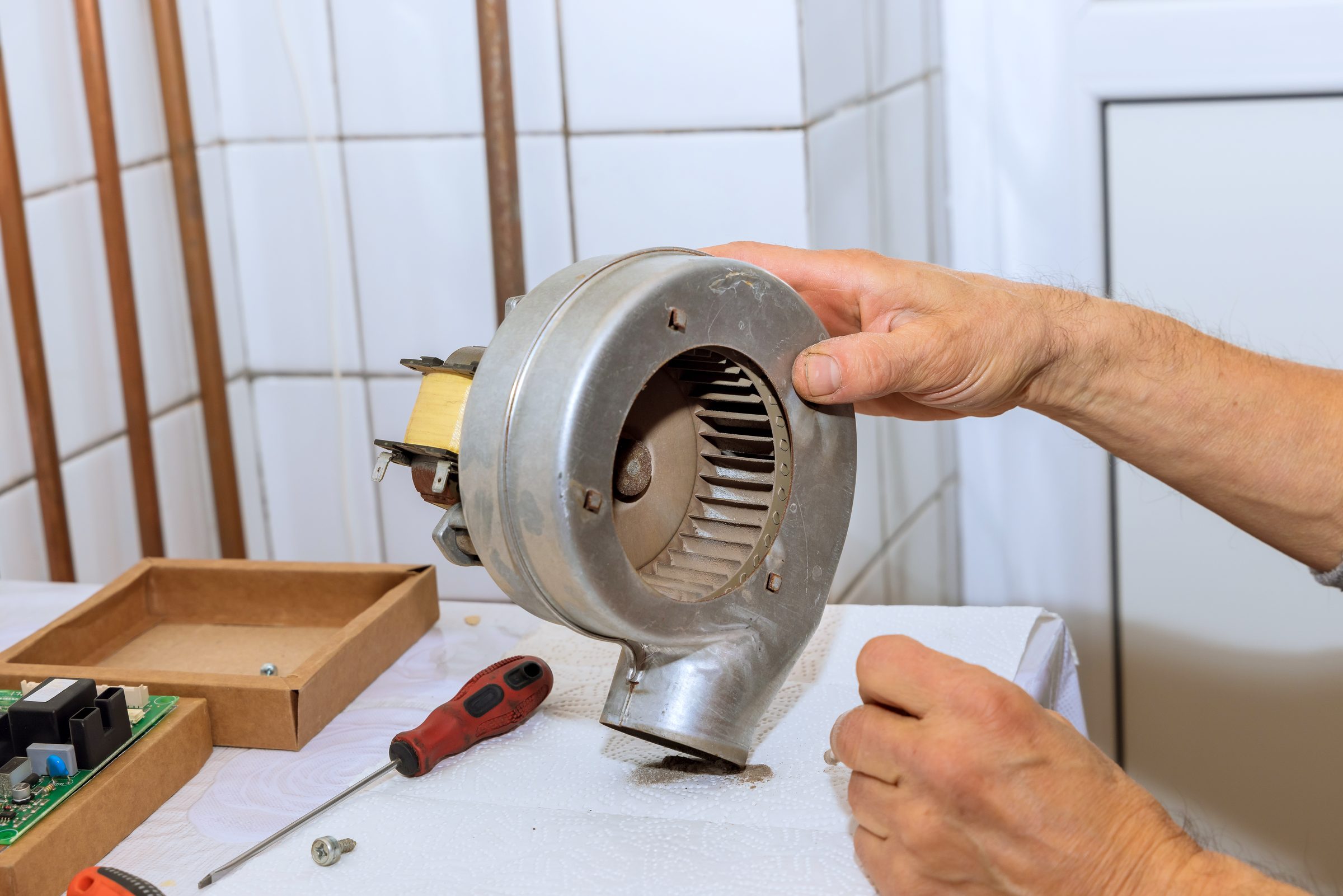
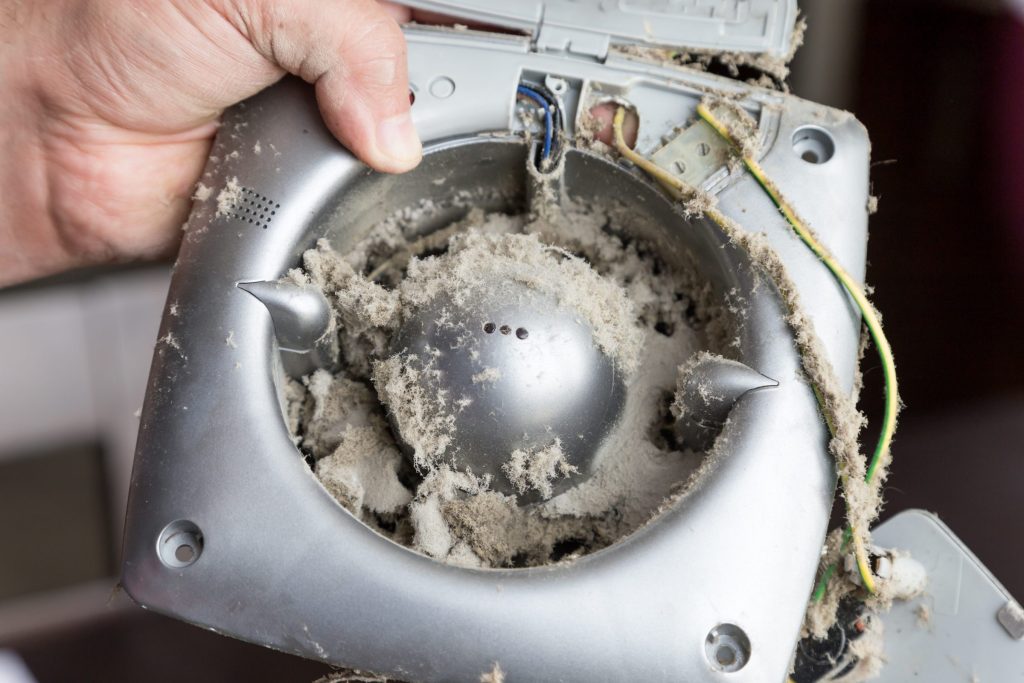
- Grease on the wheel. It builds unevenly, the wheel goes out of balance, and the motor carries a vibration it was never designed for. The motor is the part that fails; the wheel is the reason.
- A capacitor. On many hoods the motor will hum and not start, or start only on high, and the part behind that is a fraction of a motor.
- A speed control or a switch. A hood that works on one setting and not another is not a motor problem at all.
- A damper that has seized. The motor runs, moves nothing, and everybody blames the motor. In salt air near the water this is common enough to check first.
Which is why the estimate starts with what it does rather than with what it costs: a hood that hums, a hood that runs quietly and clears nothing, and a hood that is silent are three different figures.
What lowers the figure, and you control most of it
- Filters monthly. The single largest factor, and it is free. Grease that never reaches the wheel never unbalances it.
- Run it a few minutes after cooking. It clears the duct rather than leaving warm grease to condense in it.
- Say how long it has been noisy. A hood that has been loud for a year is a different job from one that changed last week, and it is the question we ask before quoting anything.
Keeping it out of this band
Baffle filters, monthly, over an open burner. They go in the dishwasher or in hot water with a degreaser, and grease that never gets past them is grease that never reaches the motor. It is the whole maintenance story for this appliance.
If it turns out to be a repair
What this leads to, and what it costs
Every job on this site is priced the same way: an on-site diagnostic first, the figure agreed in writing before anybody starts.
-
from $165 Range hood & downdraft repair
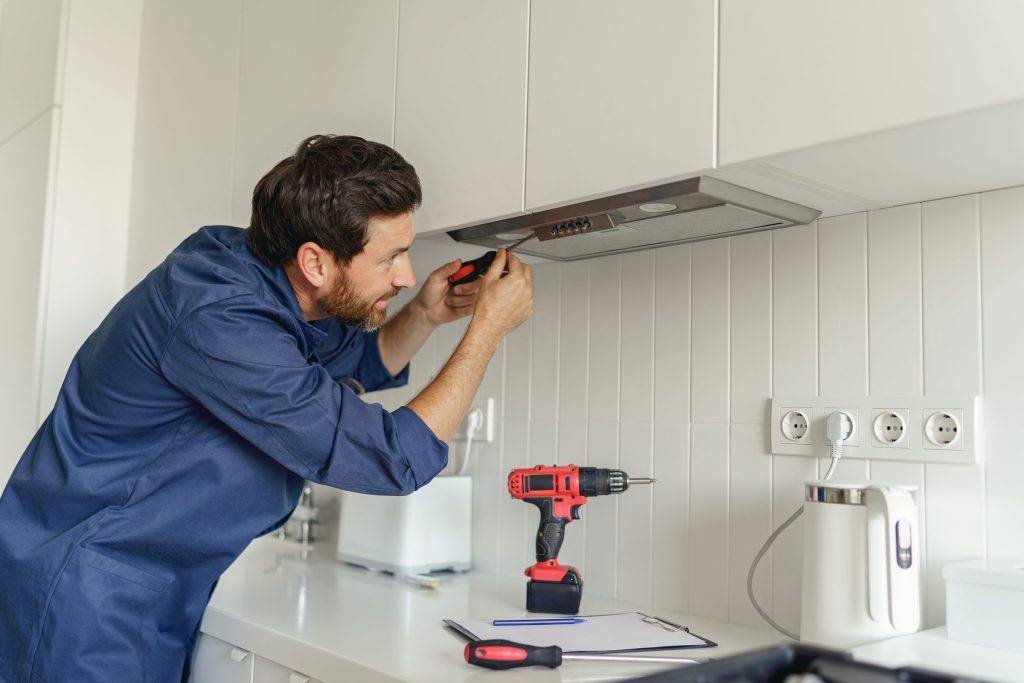
Motors, capacitors, lamps, filters and dampers — and on a downdraft, a lift mechanism that rises out of the counter. The cheap end of this list, and it should read that way.
- Motor and capacitor tested separately
- Baffle filters and the duct path checked
- Downdraft lift serviced as its own mechanism
-
A hum is better news than silence Range hood not extracting
A hood that does nothing, hums without turning, or runs and moves no air. Three different repairs behind one complaint, and the cheapest of them is very common.
- No response at all from any speed
- A hum with no rotation
- It runs but the kitchen still fills with steam
-

A separate circuit entirely Range hood lights not working
Lamps that have gone out while the fan works perfectly, or lights that flicker. A separate circuit from the motor, and usually the least expensive call on this list.
- One lamp out, the rest fine
- All lamps out with the fan still working
- Flickering, or lights that come on and drop out
-
Wall · Chimney · Island · Liner · Rear downdraft · Ceiling Ventilation
Wall hoods, chimney hoods, the liners hidden inside joinery, ceiling units and the rear downdrafts that rise out of the counter. It is the shortest parts list in the kitchen — motor, capacitor, switch, lights, damper, filters — and the appliance most likely to be quietly running at half its output for a year.
- A blower that hums and will not turn
- Speeds that no longer change
- Grease finding its way back into the room
Questions people ask about this
The fan hums but does not spin.
Usually the capacitor, which is genuinely good news. It is one of the least expensive repairs on this whole site and it is a common failure on a motor that has run for years.
It runs but the kitchen still fills with steam.
Take the filters out and run it again. If the airflow is transformed, the answer was grease. If nothing changes, look at the damper or the duct — a hood can run perfectly and move nothing.
Is there an error code for a hood?
No. This maker publishes no code for any hood, ventilator or downdraft. The only ventilation that shows a message is a microwave hood, and that is the microwave half of it.
Is it worth repairing rather than replacing?
On a professional hood over a professional range, yes — these are substantial units and the parts are ordinary. On a small chimney hood we will tell you honestly how the figure compares.
What about a downdraft?
Higher, because a rear downdraft has a motorized lift mechanism a hood does not, and it lives at counter height where everything gets spilled into it.
Cost Expectations
More guides like this one
-

What an Appliance Service Call Costs in South Florida — and What the Fee Is For
What the fee buys, why it is credited, and the three situations where the visit is the whole bill because nothing turned out to be broken.
Read more -

Viking Refrigerator Repair Cost: Where the Cheap Half Ends and the Expensive Half Begins
Two bands with a hard line between them: everything outside the sealed system, and the sealed system. Which side a cabinet is on is decided by measurements you can partly take yourself.
Read more -

What a Viking Oven Repair Costs, and What Makes It Cheaper
Three things move the figure, and two of them you can answer before anybody drives out: which mode fails, and what the display already said in words.
Read more
Tell us the model number and what it is doing.
This article is based on:
- Official manufacturer documentation
- Internal repair procedures
- Technician repair history
- Company quality standards
 English