Service
Viking wine cellar repair
Single-zone and dual-zone cabinets, glass doors, and a temperature that has to be right rather than merely cold. On a two-zone unit the code means something different from what it means anywhere else on this make.
- From $95 diagnostic, credited to the repair
- 59 cities and neighborhoods covered
- OEM parts available on order
- In writing the price, before anything is opened
Before you read on
What this job costs and how it is agreed
A starting figure, not a quote. What moves it is the model, how the unit is built in and which part it needs — settled after the on-site diagnostic.
Starts at
from $215
After a diagnostic from $95, which comes off the bill when you go ahead.
or call (305) 697-3843
Diagnostic
From $95, credited to the repair
The price
In writing, before anything is opened
Warranty
On the labor we performed
On the visit
How this visit actually goes
The same order every time, so nothing is opened and nothing is charged before you have seen the figure and said yes.
-
01
Read the set points first
A cellar running at the wrong temperature is sometimes a cellar set to the wrong temperature, and that answer is free.
-
02
Establish single-zone or dual-zone
On a two-zone cabinet this maker publishes E1 and E4 against the compartment sensors; on a single-zone drawer the same numbers mean the compressor and the display thermistor. The model number decides which table applies.
-
03
Check the door as a thermal load
A glass door in a Florida kitchen is doing real work. Condensation on the inside of the glass is usually the seal or the room rather than the refrigeration.
-
04
Clear the code once and watch
The maker asks for this, because a supply fluctuation can display a code with nothing wrong. A code that comes back after a proper clear is a code that means something.
Applies to
The Viking units we carry this work out on
-
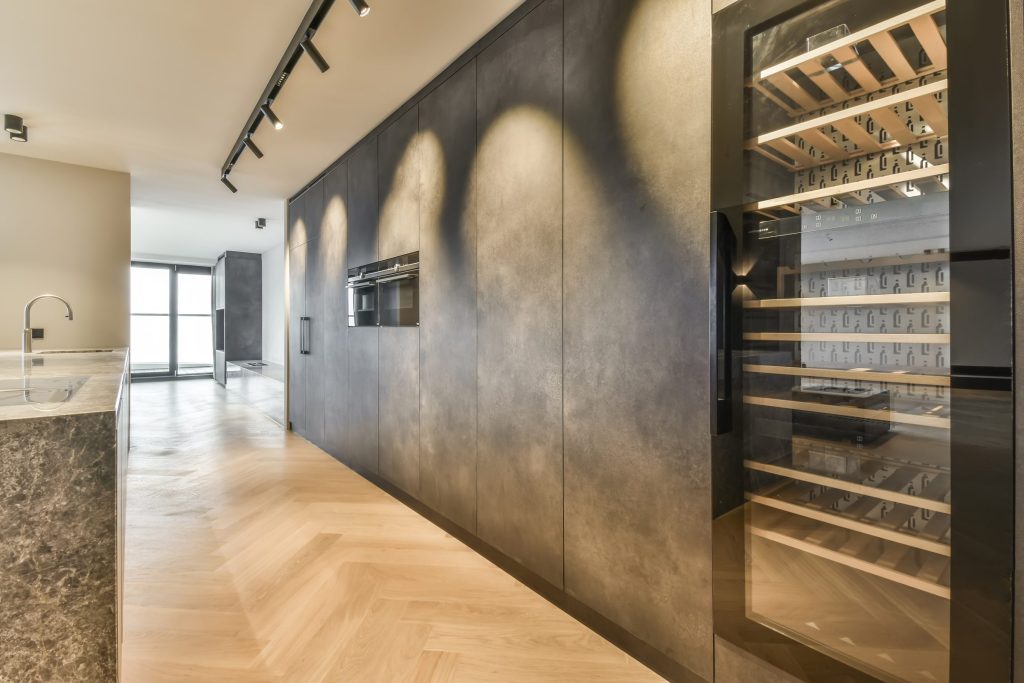
Undercounter · Full-height · Glass door · Solid door · Single and dual zone Viking wine cellar repair in Miami
Undercounter cellars of 24 and 45 bottles, full-height units, glass-door and solid-door models, single and dual zone. The mechanism is refrigeration; the requirement is not. A cellar that holds 48°F instead of 55°F is failing at its only job while looking completely normal.
- A zone holding the wrong temperature
- Condensation inside the glass
- A compressor that runs and runs
In more detail
About Viking wine cellar repair
Cold is not the requirement — right is
A wine cellar is judged on stability rather than on temperature. A cabinet that swings four degrees through the day is doing worse by the wine than one running slightly warm and holding, and that is not something a display makes obvious.
What actually goes wrong
- Compartment sensing, especially on the two-zone cabinets where each zone has its own.
- The damper or the zone fan, which produces one correct zone and one that is not.
- The door — seal, hinge, or a glass door carrying more heat than the cabinet can shed.
- The condenser, behind a kickplate in an island where nobody has looked in years.
What decides the figure
Zone count, and whether the cabinet is integrated into cabinetry with a custom panel. A fifteen-inch single-zone unit is the low end of this row and a fully integrated 30-inch column is not.
This article is based on:
- Official manufacturer documentation
- Internal repair procedures
- Technician repair history
- Company quality standards
Before you book
Questions about Viking wine cellar repair
One zone is right and the other is not.
That is useful and it narrows things immediately — the compressor and the condenser are shared, the sensing, the fan and the damper for that zone are not. It is usually a contained repair.
There is condensation on the inside of the glass.
Normally the door seal or the room rather than the cabinet. A glass door in a humid kitchen with the air conditioning off during the day will do it, and so will a seal that has hardened.
The display shows E1. What is it?
It depends which cabinet you have, which is the honest answer. On a single-zone unit this maker publishes E1 against the compressor; on some dual-zone cabinets it is published against a compartment sensor. Give us the model number and the answer is immediate.
Where we do it
Across Miami-Dade, Broward, and Palm Beach
Same terms everywhere we go: an on-site diagnostic first, the price agreed in writing, and the exact figure confirmed once we have seen the unit.
Neighborhoods people ask for by name
 English