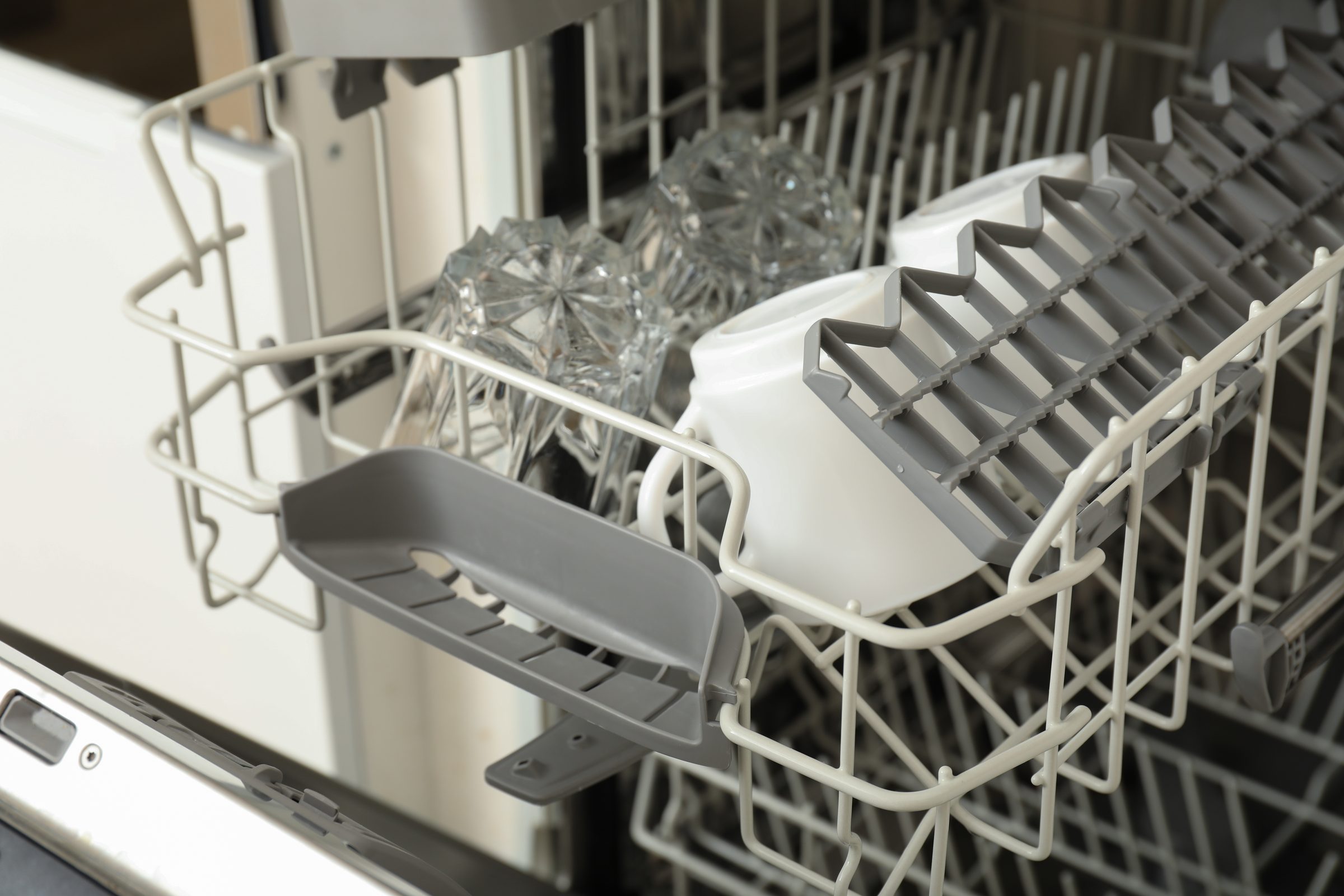
- “Everything wet at the end of a cycle”
- “Plastics wet while china is dry”
- “The sanitize indicator not lighting”
Symptom
Viking dishes coming out wet
Dishes that are clean and wet, or plastics that never dry while everything else does. Some of this is how modern dishwashers work and some of it is a real condition.
- From $95 diagnostic, credited to the repair
- 59 cities and neighborhoods covered
- OEM parts available on order
- In writing the price, before anything is opened
Five ordinary causes
What this usually turns out to be
Cheapest and commonest first, which is also the order we check them in. They sit hundreds of dollars apart, and only the unit settles which one is yours.
-
Rinse aid empty
The commonest cause and the cheapest. These machines dry by condensation and rinse aid is what makes water run off rather than sit.
Diagnostic visit from $95 -
Plastics
They hold less heat than china or glass, so they stay wet in a condensation dryer. That is physics rather than a malfunction.
Diagnostic visit from $95 -
The heating element or temperature sensing
Published as its own flash pair on this machine, and it affects washing as well as drying.
Dishwasher pump & motor repair from $265 -
A cycle without heat selected
The lighter cycles run cooler by design, and a machine set to the fast cycle will not dry like the normal one.
Diagnostic visit from $95 -
Overloading
Dishes nested together hold water between them however good the machine is.
Diagnostic visit from $95
In five minutes
Before you call anybody
None of it needs tools, and all of it makes the visit shorter.
-
01
Fill the rinse aid
Then run one normal cycle before judging anything else.
-
02
Compare plastics with china
If the china is dry and the plastics are not, the machine is working.
-
03
Check which cycle is being used
The fast and light cycles run cooler and dry less.
-
04
Does the sanitize indicator light
It only lights if the water reached the required temperature, which makes it a free thermometer.
How it shows up
What people describe when they call

Two shortcuts
Narrow it down before anybody arrives
A description of the behaviour leaves a few possible causes. A code names the subsystem, and the model number says which parts to bring. Either one shortens the visit; both together usually settle it.
If the display is showing something
Photograph it before it clears — codes do not wait. Search the full code list
If there is no code at all
On a dishwasher, the data plate is on the edge of the door — open it and look along the top or the side. All models
In more detail
About Viking dishes coming out wet
The fastest diagnosis is the code
Check the rinse aid dispenser. It is not optional on a machine that dries by condensation — without it water sheets and stays on the dishes, and refilling it transforms the result for a few dollars.
How this machine actually dries
Not with a fan and not with a glowing element in the cavity. It heats the final rinse, and the dishes then hold enough heat to evaporate the water, which condenses on the cooler stainless walls and drains away. Everything about that depends on water running off the dishes in the first place, which is what rinse aid does.
The free thermometer on the front
The sanitize indicator lights only when the water genuinely reached temperature. If it stops lighting, the machine is telling you something about its heating before anything else does — and that is worth noticing.
This article is based on:
- Official manufacturer documentation
- Internal repair procedures
- Technician repair history
- Company quality standards
Before you book
Questions about Viking dishes coming out wet
Do I really need rinse aid?
On this machine, yes. It dries by holding heat and letting water condense on the walls rather than by blowing hot air, and without rinse aid the water sheets and stays where it is. It is the single cheapest improvement available.
The sanitize light does not come on.
That indicator only lights when the water reached the required temperature for the required time. It not lighting is useful information — either the cycle was interrupted or the water is not being heated properly.
It used to dry better.
Rinse aid first, then the cycle being used, then the heating and sensing. The first two are free and they are right most of the time.
Where we do it
Across Miami-Dade, Broward, and Palm Beach
Same terms everywhere we go: an on-site diagnostic first, the price agreed in writing, and the exact figure confirmed once we have seen the unit.
Neighborhoods people ask for by name
 English