Safety & Risks
How Long Food Is Safe Without Power — Written for a Florida Storm Season
How long is food safe in refrigerator without power? Four hours for a refrigerator and forty-eight hours for a full freezer, with the doors kept shut — those are the national figures and they assume a house at room temperature. In a South Florida outage with the air conditioning off and the room at 85 to 90°F, treat the refrigerator figure as closer to two or three hours and a half-full freezer as closer to twenty-four. The deciding number is 40°F: food that has been above it for more than two hours goes, whatever the clock says.
The full guide
How long is food safe in refrigerator without power
40°F, for more than two hours. That is the line, and it is a line about the food rather than about the clock on the wall. Everything else on this page is an estimate of how long it takes to reach it.
The national figures, and why they are optimistic here
Four hours for a refrigerator with the door kept shut. Forty-eight hours for a full freezer, twenty-four for a half-full one.
Those numbers assume a house at ordinary room temperature. A South Florida outage does not come with one. The air conditioning is off too, the house climbs into the high eighties within a couple of hours, and a refrigerator is now losing cold into a room considerably warmer than the figure assumed.
Treat the refrigerator number as two to three hours rather than four, and a half-full freezer as around twenty-four. And pack the freezer: a full freezer holds cold far longer than an empty one, which is a genuine reason to fill the space with jugs of water before a storm rather than after.
What the appliance recorded while you were out
Most of this maker's refrigeration keeps the evidence for you. Columns and integrated cabinets show a long-term power loss indicator and the highest temperature reached while the power was off. Read it before you clear it — it answers the question you cannot answer any other way.
If yours does not, the trick that works afterwards is a cup of water frozen solid with a coin resting on top. Left in the freezer, it tells you later: coin still on top, it stayed frozen; coin at the bottom, everything thawed and refroze.
What goes and what stays
Goes after two hours above 40°F: meat, poultry, fish, eggs, dairy, soft cheese, cooked leftovers, anything with mayonnaise, cut fruit and cooked vegetables.
Usually fine: hard cheese, butter, most condiments, whole uncut fruit and vegetables, jams, and anything that lived in a cupboard before it lived in the refrigerator.
Refreezing is safe if the food still has ice crystals in it or is at 40°F or below. Quality suffers; safety does not.
Why a built-in column holds temperature differently
Worth knowing before an outage rather than during one:
- Mass helps. A full cabinet holds cold far longer than an empty one, and a freezer full of ice is the best thermal battery in the kitchen. Filling gaps with bottles of water before a storm is free and it works.
- The door is the whole game. Every opening costs a measurable part of the reserve, and a heavy paneled door gives more back than a mainstream one if it is left alone.
- A column stratifies. When the air stops moving, the top shelf goes first — which is worth knowing when you decide what to save.
- Ambient matters. A South Florida kitchen at 88°F with the air conditioning off takes hours off the numbers on this page.
What to check when it comes back on
- Look at the display before touching anything. This equipment records the interruption: Power loss alarm on the columns, Power failure on the integrated units, and separately a high temperature alarm if the cabinet actually drifted. Which of the two it is showing is worth more than any description afterwards.
- Give it several hours before judging anything. A column that has been off for a day recovers more slowly than people expect, and the ice maker is the last thing to come back.
- Then measure rather than read. A thermometer in a glass of water, middle shelf, overnight.
- Throw away by the clock, not by the smell. Refreezing partially thawed food is the mistake this article exists to prevent.
Before the next one
- Freeze water jugs now. They fill space, they hold cold, and they become drinking water.
- Know where your cabinet's temperature recording is, before you need it.
- If a generator is on the list, have an electrician do the connection.
- Do not open the doors to check. Checking is what costs you the hours.
If it turns out to be a repair
What this leads to, and what it costs
Every job on this site is priced the same way: an on-site diagnostic first, the figure agreed in writing before anybody starts.
-
On this make, it may be its own appliance Freezer not freezing
A freezer that is soft rather than solid, or a column that has warmed while the refrigerator beside it is perfect. On this make those two cabinets are frequently two separate machines.
- Ice cream soft, everything else still frozen
- A whole column warm while the one next to it is fine
- Frost gone from the walls, which is a warning sign
-
Start at the condenser, not the compressor Refrigerator not cooling
A cabinet that is running and not getting cold, or getting cold and not staying there. Most of these are not the sealed system, and in this city the first thing to look at is the condenser.
- Running constantly and still warm
- Cold at first and warming through the day
- A high temperature alarm or an E-code on the display
-
All Freezer · Custom panel · Fully integrated · 30" and 36" All Freezer columns
A card of its own because on this brand a freezer usually is its own appliance: a full-height All Freezer column standing beside an All Refrigerator, the two joined under one grille kit so they look like a single unit. When one of the pair stops, the other keeps working, and nothing about the kitchen looks different.
- A column that has drifted warm without warning
- Frost building where it never used to
- The ice maker inside it stopping first
-
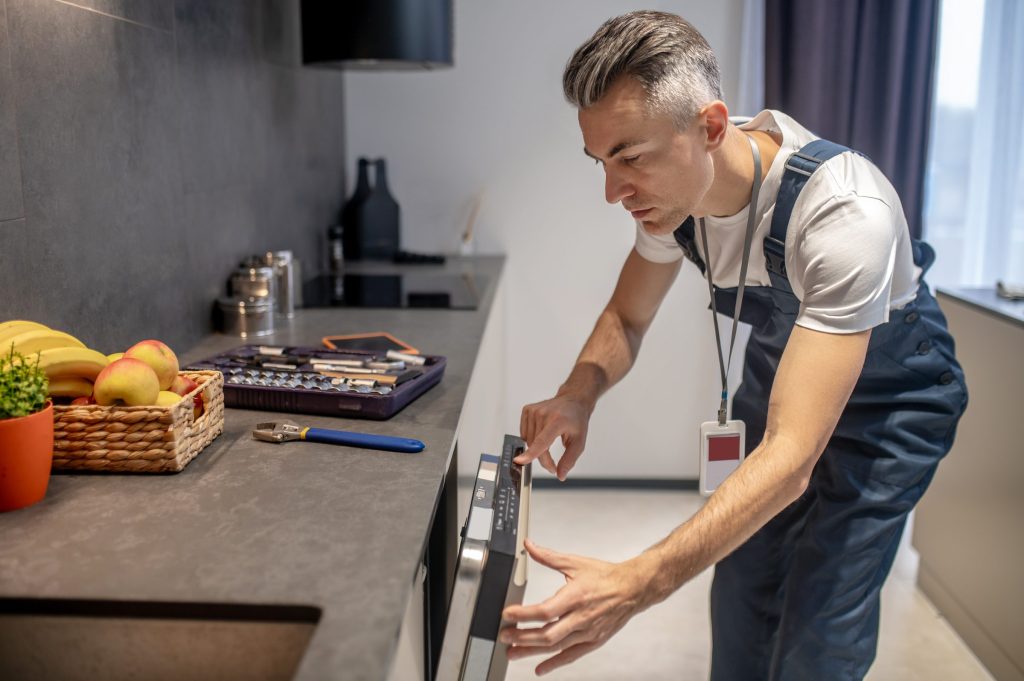
from $95 Diagnostic visit
One visit that ends with a named cause, a figure and a decision — and the fee comes off the bill if you go ahead with the work.
- Credited against the repair
- A written figure before anything is ordered
- Ten appliance types, one rate

Questions people ask about this
Can I tell by looking or smelling?
No, and this is the part worth being firm about. Bacteria that make people ill do not change how food looks or smells. A thermometer is the only test, and 40°F for more than two hours is the line.
The power came back before I got home. How do I know how warm it got?
Many of these cabinets record it. Viking columns and integrated cabinets show a long-term power loss indicator and the highest temperature reached — read it before clearing it. Failing that, a cup of water frozen with a coin on top tells you afterwards: if the coin is at the bottom, it thawed.
Does opening the door really matter that much?
More than anything else you control. Every opening in a hot kitchen replaces cold air with humid 88°F air, and the figures above assume the door stayed shut the whole time.
Is a generator worth it here?
For a household that has been through a multi-day outage, usually yes — and a refrigerator is one of the lowest-draw things worth putting on it. Have an electrician handle the connection rather than running extension cords under a door.
What about a wine cellar?
Wine is far more forgiving than food over a short outage. What harms it is repeated swings rather than a day slightly warm, so leave the door shut and do not open it to check.
Safety & Risks
More guides like this one
-
Gas Smell From a Viking Oven: What Is Normal, What Is Not, and What to Do First
A faint smell in the first seconds of lighting is one thing. A smell with the appliance off is another, and the second one is not a repair call.
Read more -
A Burning Smell From a Refrigerator: Which Ones Are Urgent
Four different smells with four different meanings, and only one of them means switch it off at the breaker now. Including the one people miss.
Read more -
A Grease Fire on an Open-Burner Range: What to Do in the First Ten Seconds
Written for the appliance this site repairs. A professional open burner puts out considerably more heat than the range it replaced, and the hood above it is full of the thing that is burning.
Read more
Tell us the model number and what it is doing.
This article is based on:
- Official manufacturer documentation
- Internal repair procedures
- Technician repair history
- Company quality standards
 English