Safety & Risks
Gas Smell From a Viking Oven: What Is Normal, What Is Not, and What to Do First
Why does my Viking oven smell like gas? A brief smell in the first seconds while a burner or oven igniter lights is normal — unburnt gas before ignition catches. A smell that persists while the appliance runs, or any smell at all with the appliance switched off, is not normal. In that case do not switch anything on or off, do not use a light switch or a phone indoors, open a door on your way out, leave the house, and call the gas utility or 911 from outside. A repair company is the call after that, not before it.
The full guide
If you can smell gas with the appliance switched off, stop reading and leave. Do not operate any switch, including a light or a hood. Do not use a phone indoors. Open a door on your way past if it is on your way, and call the gas utility or 911 from outside. Everything else on this page comes after that.
Why does my Viking oven smell like gas — the smell that is normal
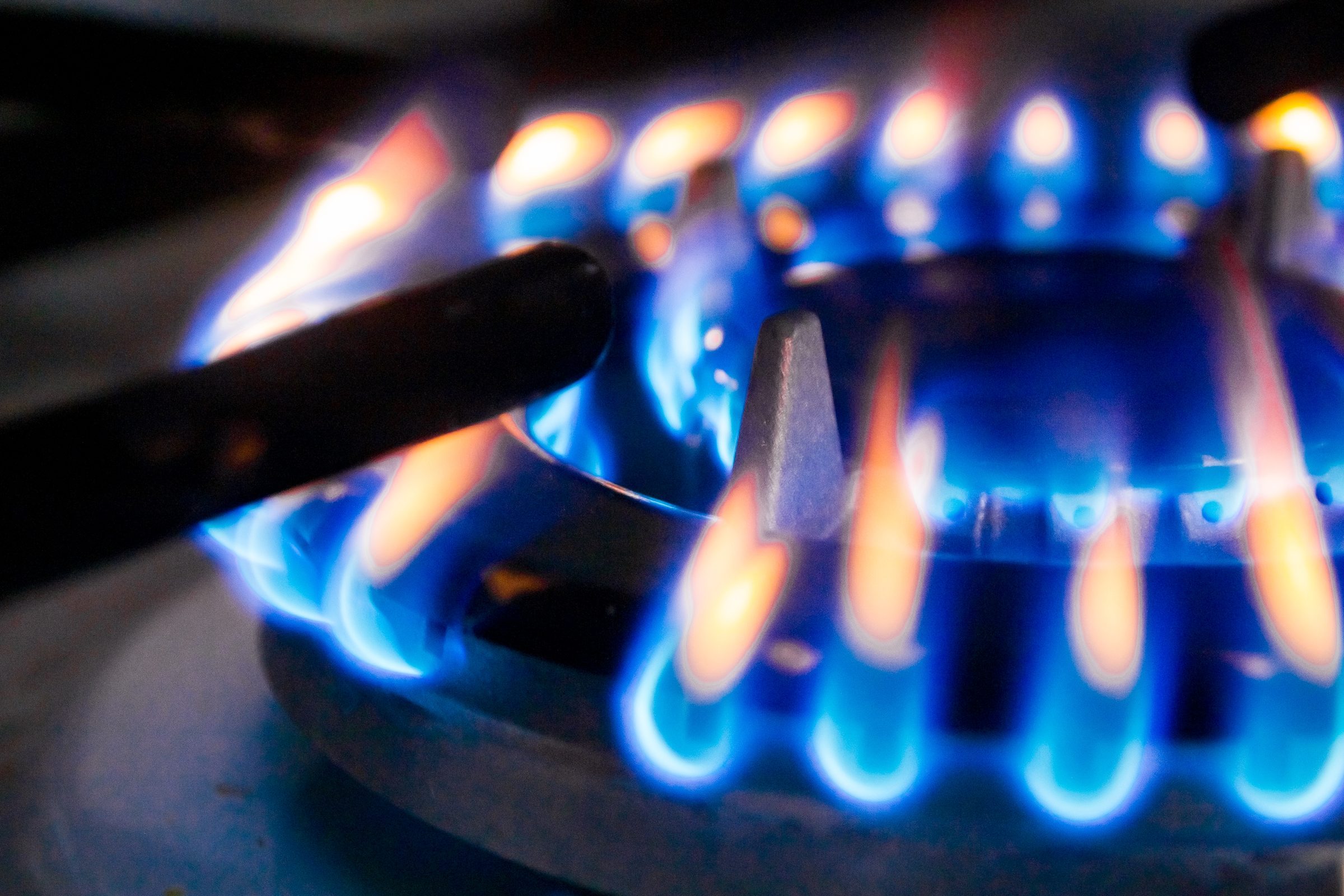
A few seconds of gas smell while a burner or an oven igniter is lighting is ordinary on any gas appliance. Gas is released a moment before ignition catches, and you are smelling that moment. It goes as soon as the flame establishes.
Two things make it more noticeable on this equipment: professional open burners deliver more gas than a domestic cooktop, and an oven igniter takes several seconds to reach the temperature that opens the valve.
The smells that are not
While it runs. A burner alight and still smelling of gas is incomplete combustion or a leak, and neither is something to live with.
Only when preheating. On a gas oven this is a specific and common repair: an igniter that has weakened glows convincingly and no longer gets hot enough, quickly enough, to open the gas valve when it should. Gas is released for too long before it catches.
With the appliance off. Not a cooking problem. A connection, a valve or the supply, and the correct response is the warning at the top of this page.
Why the open burner changes the conversation
Everything above the manifold on an open burner lifts off in your hand, which is the best thing about the design. Below the manifold are the valves and the gas connections, and that is where it stops being an owner job entirely.
A yellow, lazy flame is worth acting on even without a smell. It means incomplete combustion, it soots the bottom of pans, and it is usually a blocked port ring — ten minutes with a brush on this burner.
What a repair can address
- An igniter that has weakened, on a gas oven.
- Ports blocked, giving incomplete combustion.
- Flame sensing, which lets a burner light and then closes the valve.
- Air shutter adjustment, which is what a persistently yellow flame across a whole burner points at.
- Gas type, where a range was never converted or was converted wrongly. It burns wrong from the day it was installed.
How the oven burner is supposed to light
Knowing the sequence is the difference between a smell you can explain and one you cannot:
- The control calls for heat and energizes the igniter.
- The igniter heats up. It is not a spark — it is an element that glows, and the current it draws while glowing is what the safety valve is watching.
- The valve opens only once that current is right. The igniter is the sensor as well as the heater, which is the elegant part of the design.
- Gas arrives at a hot surface and lights immediately.
An igniter that has aged still glows — often brightly — and no longer draws what the valve waits for. The valve opens late, gas has been flowing for a moment before it catches, and you get the pause and the thump. A glowing igniter is not proof of a healthy one, and this is the most misdiagnosed thing on a gas oven.
It also explains why delayed ignition gets worse rather than better: the igniter is degrading, and every cycle takes a little longer than the last.
Say when the smell happens, not only that it happens
Three answers, three different places:
- Only at the start of a cycle — the ignition sequence above, and an appliance repair.
- Only while a burner is running — unburned gas, which is the burner, the mixture or the orifices. Yellow flames on every burner at once point at the fuel setup rather than any one burner.
- With everything off — something is passing gas that should not be. That is the supply, and it is the utility's call before it is ours.
The last one is not the appliance's to fix, and saying which of the three you have on the phone changes who should be standing in your kitchen first.
What a repair cannot address
A leak in the supply, a connection behind the appliance, or anything upstream of the shut-off valve. That is the utility's territory and a licensed gas fitter's, and we will tell you when what we find is theirs rather than ours.
Worth saying for this area: a CO alarm in a kitchen with gas cooking is inexpensive and it is the only way to detect the thing you cannot smell. In a closed, air-conditioned condo kitchen with an extractor that recirculates rather than vents, it matters more than it does in a house with windows open.
If it turns out to be a repair
What this leads to, and what it costs
Every job on this site is priced the same way: an on-site diagnostic first, the figure agreed in writing before anybody starts.
-
It clicks, and nothing happens Burner will not light
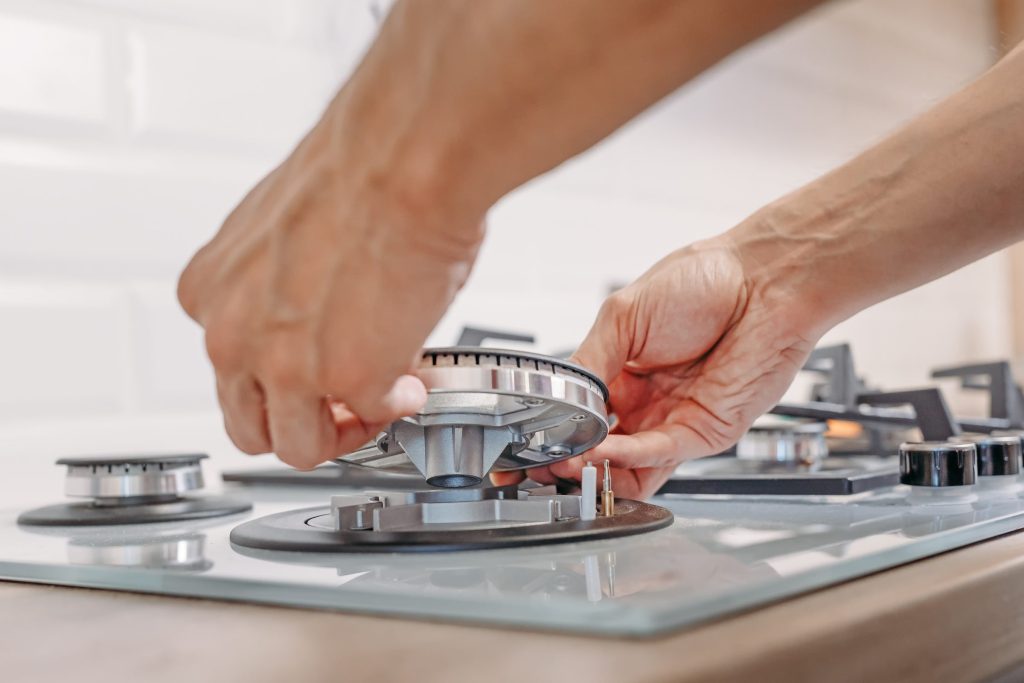
A burner that clicks and never catches, or catches and drops out a few seconds later. The appliance will tell you nothing about it — this maker publishes no code for gas — so the diagnosis is entirely in what the burner does.
- Clicks and clicks without lighting
- Lights and goes out after a few seconds
- One burner out while the rest are fine
-
Lazy on one side of the ring Open burner flame uneven or yellow
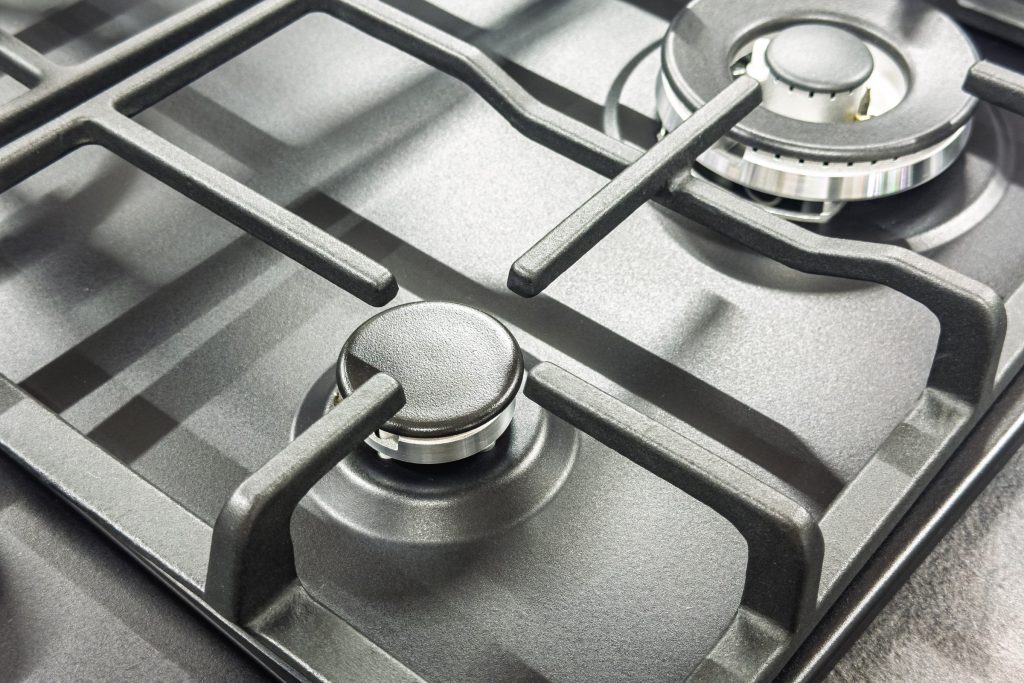
A flame that is blue on one side and yellow and lazy on the other, or a ring that never quite makes a full circle. On an open burner this is visible, reachable and usually free to correct.
- Yellow or orange tips on one side
- Part of the ring not lighting at all
- Sooting on the bottom of the pan
-
from $165 Sealed burner & igniter repair
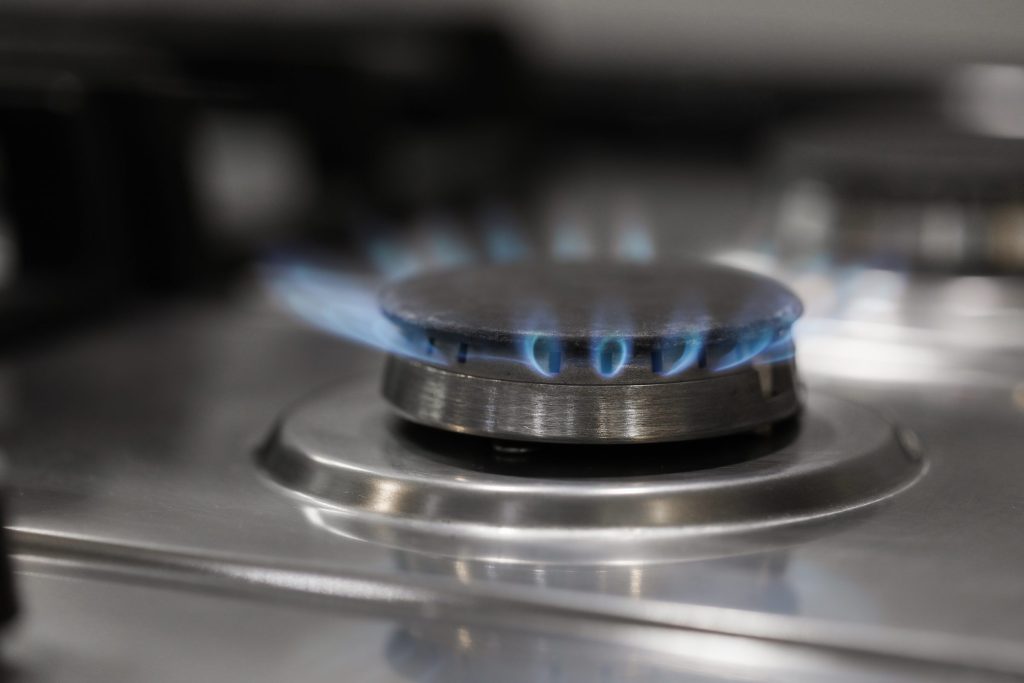
The sealed gas top: igniters that click without lighting, a simmer that will not hold, a burner that goes out under a lid. None of it shows a code, because this maker publishes none for gas.
- Igniter and electrode tested individually
- Simmer proved on the low setting
- Caps and ports checked before parts
-
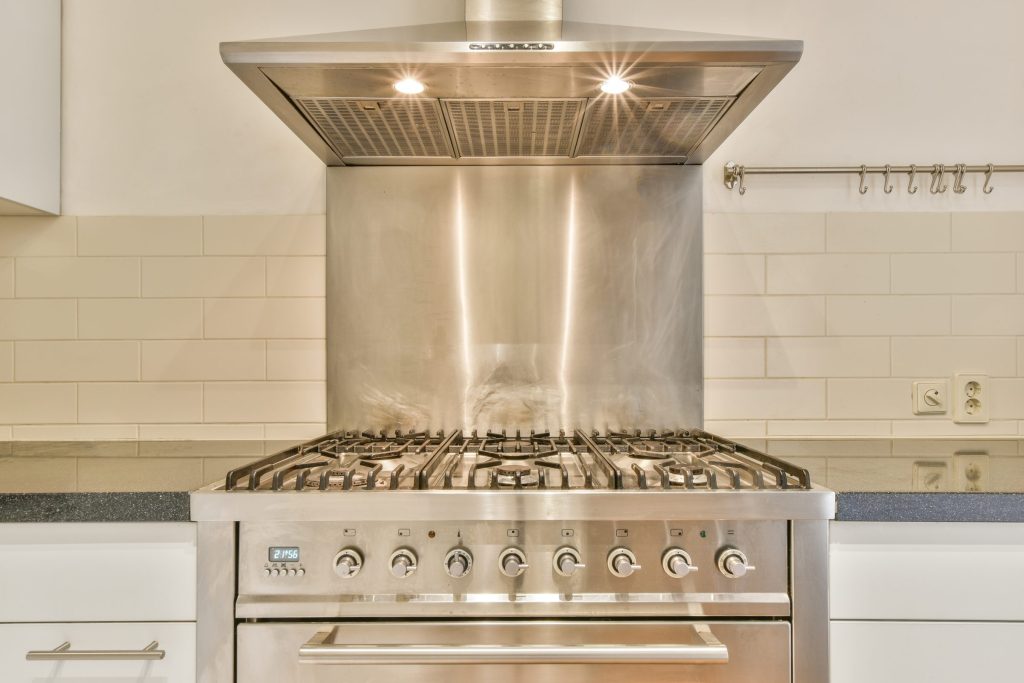
Open burner · Sealed burner · Dual fuel · Electric · Induction · 24" to 66" Ranges
The appliance this brand is named for, and the one place it does something nobody else does: an open burner that comes apart in your hands. Gas, dual fuel, all-electric and induction are all sold under the same badge, and a range that will not light and a range that will not heat are two completely different visits.
- A burner that sparks and never catches
- An oven that will not reach or hold temperature
- A door still locked hours after a self-clean

Questions people ask about this
It smells for a second when I light a burner.
That is unburnt gas in the moment before ignition catches, and it is normal on any gas appliance. What is not normal is a smell that carries on while the burner is running.
There is a smell when the oven is off.
Leave the house and call the gas utility from outside. Do not switch anything on or off on the way, including a light or an extractor hood — a switch makes a spark. This is not a service call in the first instance.
My oven smells of gas only when preheating.
Worth attention. On a gas oven that can be an igniter that has weakened to the point where it glows and takes too long to open the valve, so gas is released before it catches. It is a real repair and it is a common one.
Could it be carbon monoxide instead?
Carbon monoxide has no smell at all, which is exactly why it is dangerous. A CO alarm in the kitchen is inexpensive and it is worth having with any gas appliance, quite separately from any smell.
The smell is more like burning than gas.
Different problem and a different page. Burning plastic, rubber or wires from an oven is electrical and it is covered separately — but it is also a reason to switch off at the breaker rather than to wait.
Safety & Risks
More guides like this one
-
A Burning Smell From a Refrigerator: Which Ones Are Urgent
Four different smells with four different meanings, and only one of them means switch it off at the breaker now. Including the one people miss.
Read more -

How Long Food Is Safe Without Power — Written for a Florida Storm Season
The national answer is four hours and forty-eight hours. This is the version for a house at 88°F with the air conditioning off — plus what the cabinet itself recorded while it was away.
Read more -
A Grease Fire on an Open-Burner Range: What to Do in the First Ten Seconds
Written for the appliance this site repairs. A professional open burner puts out considerably more heat than the range it replaced, and the hood above it is full of the thing that is burning.
Read more
Tell us the model number and what it is doing.
This article is based on:
- Official manufacturer documentation
- Internal repair procedures
- Technician repair history
- Company quality standards
 English