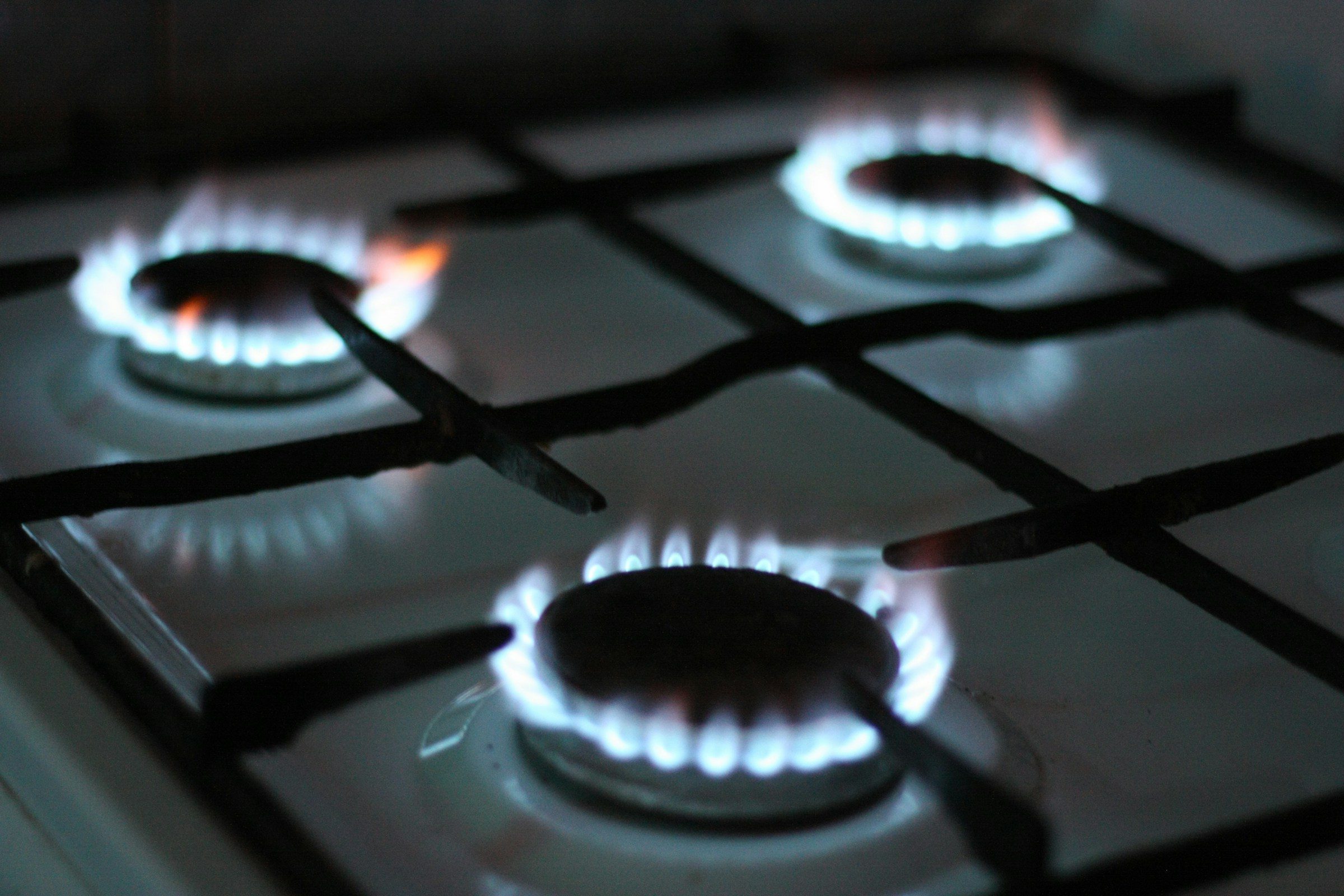
Safety & Risks
A Grease Fire on an Open-Burner Range: What to Do in the First Ten Seconds
Turn off the burner if you can reach it safely and cover the pan with a metal lid or a baking sheet, sliding it on from the side rather than dropping it. Never use water, never use flour, and do not carry the pan anywhere. If the flame reaches the hood or does not go out within seconds of being covered, leave and call 911 from outside. A grease fire on a professional open burner develops faster than on a domestic cooktop because the burner delivers far more heat, and the hood above it holds grease of its own.
The full guide
If the flame has reached the hood, or does not go out within a second or two of being covered, leave the house and call 911 from outside. Nothing below is worth staying for.
How to put out grease fire on stove: the ten seconds
- Turn the burner off — only if you can reach the control without passing your arm over the pan.
- Cover it. A metal lid or a flat baking sheet, slid on from the side, keeping your hand behind it. Dropping a lid straight down splashes burning oil.
- Leave it covered. Ten minutes at least. Lifting the lid to check reintroduces the air you just removed.
- Do not move the pan. Not to the sink, not outside. Almost every serious injury from a kitchen fire happens while somebody is carrying one.
The three things that make it worse
Water. It flashes to steam on contact with burning oil and throws that oil upward and outward. This is the mechanism behind most injuries from grease fires and it is worth knowing viscerally rather than intellectually.
Flour. People reach for it because it looks like baking soda. Fine flour suspended in air is combustible, and throwing a cloud of it at a flame is exactly the wrong shape.
The hood. Running the extractor pulls flame and burning grease into a duct with its own grease lining it. Switch it off if it is on.
Why the appliance matters here
A professional open burner delivers considerably more heat than the cooktop it replaced. Oil that used to take four minutes to reach its smoke point now takes ninety seconds, and people cook the way they always have on an appliance that is not the same one.
That is not a criticism of the range. It is the reason it was bought. It is also the reason the pan gets away from people in the first year more often than in the tenth.
The hood above it is part of the risk
An open-burner range throws more grease into a hood than a domestic cooktop, and in this climate that hood is also moving humid, salt-carrying air across its blower every day. Baffle filters that go unwashed become the fuel above the fire.
Monthly filter cleaning over a burner like this is not fussiness. It is the difference between a pan fire staying a pan fire and a pan fire finding somewhere to go.
Why a professional range changes the arithmetic
Two things are different from a mainstream cooktop, and both raise the stakes rather than lower them:
- The burners are bigger. A high-output burner brings oil to its smoke point far faster than a domestic one, and the margin between "hot enough to sear" and "too hot" is measured in tens of seconds rather than minutes.
- The hood above it is doing more. A powerful hood pulls flame and hot gas upward faster, which is why the filters and the duct matter to this page at all: grease in a duct is fuel above your head, and it is the reason filters are a monthly job rather than an annual one.
What to do with the hood, and what not to
- Do not turn the hood on to clear smoke from a fire. It draws flame toward the filters and the duct. If it is already running, and you can reach the switch without leaning across the range, turn it off.
- Do use the lid. Cutting off the air is the entire method, and the pan's own lid is the fastest thing in the kitchen.
- Do not move the pan. Carrying a burning pan is how a contained fire becomes a kitchen fire.
- Afterwards, look at the filters. A fire that reached the hood leaves them worth replacing rather than washing.
A hood that has not been cleaned is the part of this that is preventable. Everything else on this page is a moment; grease in a duct is a decision made months earlier.
Afterwards
Do not put the range back into service until it has been looked at. Heat that reached the underside of a hood, the control panel of a range, or the wiring behind either has done something that is not visible from the front, and a burner that lights afterwards is not evidence that everything else is sound.
If it turns out to be a repair
What this leads to, and what it costs
Every job on this site is priced the same way: an on-site diagnostic first, the figure agreed in writing before anybody starts.
-
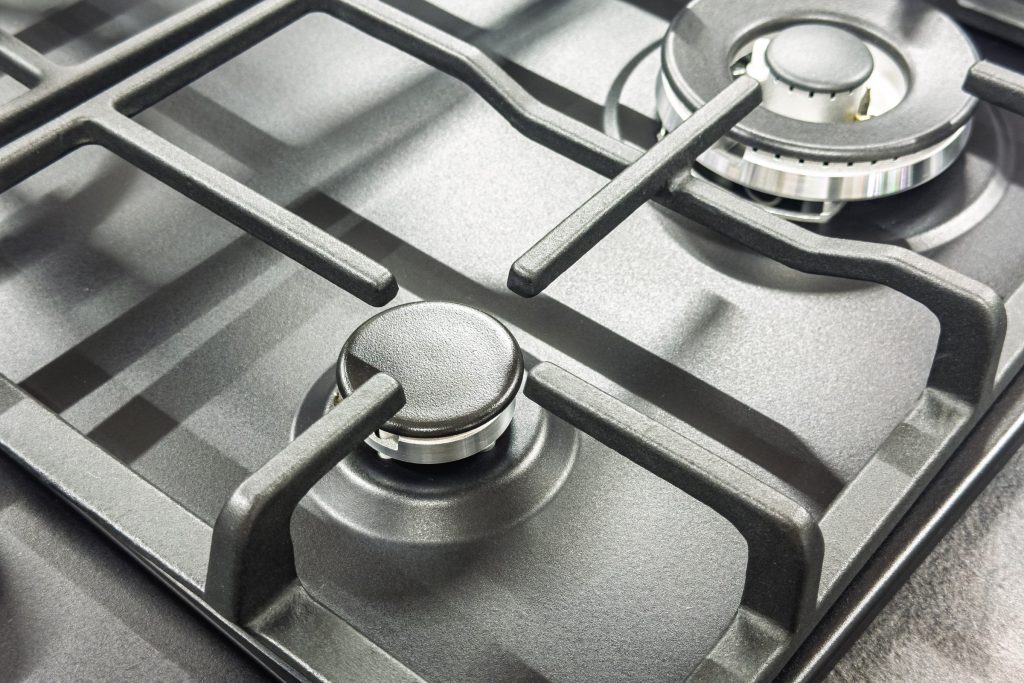
Lazy on one side of the ring Open burner flame uneven or yellow
A flame that is blue on one side and yellow and lazy on the other, or a ring that never quite makes a full circle. On an open burner this is visible, reachable and usually free to correct.
- Yellow or orange tips on one side
- Part of the ring not lighting at all
- Sooting on the bottom of the pan
-
from $165 Range hood & downdraft repair
Motors, capacitors, lamps, filters and dampers — and on a downdraft, a lift mechanism that rises out of the counter. The cheap end of this list, and it should read that way.
- Motor and capacitor tested separately
- Baffle filters and the duct path checked
- Downdraft lift serviced as its own mechanism
-
from $145 Appliance maintenance
One visit that covers the intervals this climate shortens: condensers, filters, descaling, burner ports and the drain paths. It is the visit that keeps the other twenty-six away.
- Condensers cleaned on every cold appliance in the kitchen
- Descaling on anything with a water side
- Burner ports and grill hardware checked before the season
-
Wall · Chimney · Island · Liner · Rear downdraft · Ceiling Ventilation
Wall hoods, chimney hoods, the liners hidden inside joinery, ceiling units and the rear downdrafts that rise out of the counter. It is the shortest parts list in the kitchen — motor, capacitor, switch, lights, damper, filters — and the appliance most likely to be quietly running at half its output for a year.
- A blower that hums and will not turn
- Speeds that no longer change
- Grease finding its way back into the room

Questions people ask about this
Why not water?
Water hitting burning oil flashes to steam instantly and throws the burning oil upward and outward. It turns a pan fire into a room fire, and it is the single most common way people are injured by one.
What about baking soda?
It works on a small flame if you have a large quantity to hand, and most people do not. A lid is faster and more reliable. Flour is not baking soda and it is dangerous — fine flour in air is combustible.
Should I use the extractor hood?
No. Running the hood pulls flame and burning grease up into a duct that has its own grease in it, which is exactly how a pan fire becomes a house fire.
Is a fire extinguisher worth having?
Yes — a Class K or a standard ABC dry chemical extinguisher, mounted where you can reach it without crossing in front of the range. The mounting position matters as much as owning one.
Why does this happen more on a professional range?
Because the burner delivers considerably more heat than the domestic cooktop it replaced. Oil reaches its smoke point and then its flash point faster, and people cook the way they always did on an appliance that is not the same.
Safety & Risks
More guides like this one
-
Gas Smell From a Viking Oven: What Is Normal, What Is Not, and What to Do First
A faint smell in the first seconds of lighting is one thing. A smell with the appliance off is another, and the second one is not a repair call.
Read more -
A Burning Smell From a Refrigerator: Which Ones Are Urgent
Four different smells with four different meanings, and only one of them means switch it off at the breaker now. Including the one people miss.
Read more -
How Long Food Is Safe Without Power — Written for a Florida Storm Season
The national answer is four hours and forty-eight hours. This is the version for a house at 88°F with the air conditioning off — plus what the cabinet itself recorded while it was away.
Read more
Tell us the model number and what it is doing.
This article is based on:
- Official manufacturer documentation
- Internal repair procedures
- Technician repair history
- Company quality standards
 English