Maintenance & Prevention
Cleaning Viking Range Hood Filters Over an Open Burner
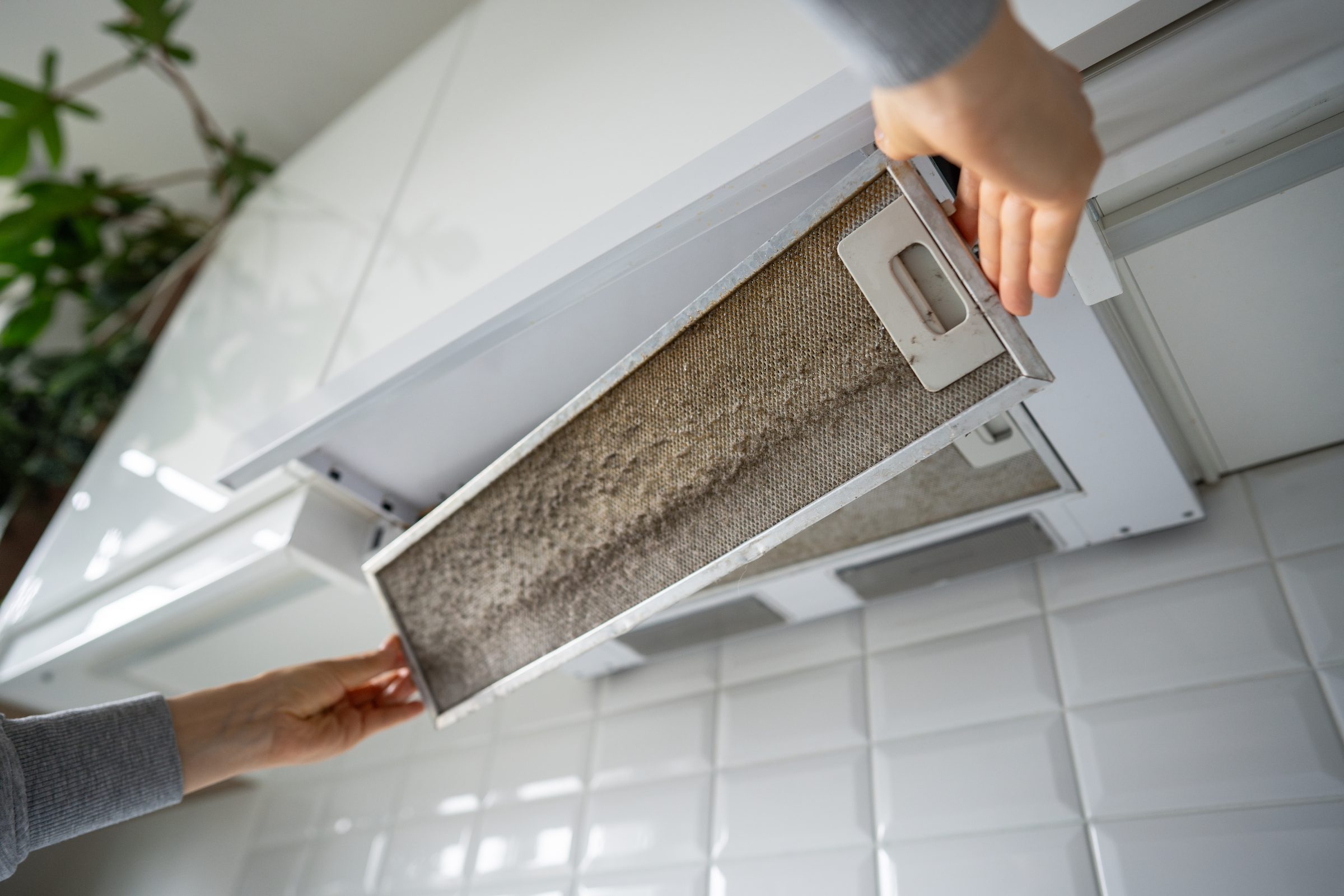
Take the baffle or mesh filters out, run them in the dishwasher on the top rack or soak them in hot water with a degreaser, dry them and put them back the same way round. Over a professional open-burner range, monthly is realistic rather than the two or three months a manual suggests — that burner throws considerably more grease into a hood than the cooktop it replaced. A hood that recirculates instead of venting outside also has a charcoal filter, and that one is thrown away rather than washed.
The full guide
How to clean Viking range hood filters: two filters, nothing alike
Baffle or mesh filters catch grease on its way up. Every hood has them, they are washable, and they last the life of the appliance.
Charcoal filters absorb odor on the way back into the room, and only a hood that recirculates has one. It cannot be washed. Washing it destroys it, and a soaked charcoal filter does nothing at all afterwards.
Why monthly here
An open-burner professional range is not the cooktop it replaced. It puts out more heat, it is used for more searing and frying, and it throws considerably more grease-laden air at the hood above it.
In this climate the hood is also moving humid, salt-carrying air across the same blower every day. The combination is what turns a hood into a motor job rather than a filter job — and the motor is protected entirely by a part that goes in the dishwasher.
The part everybody skips
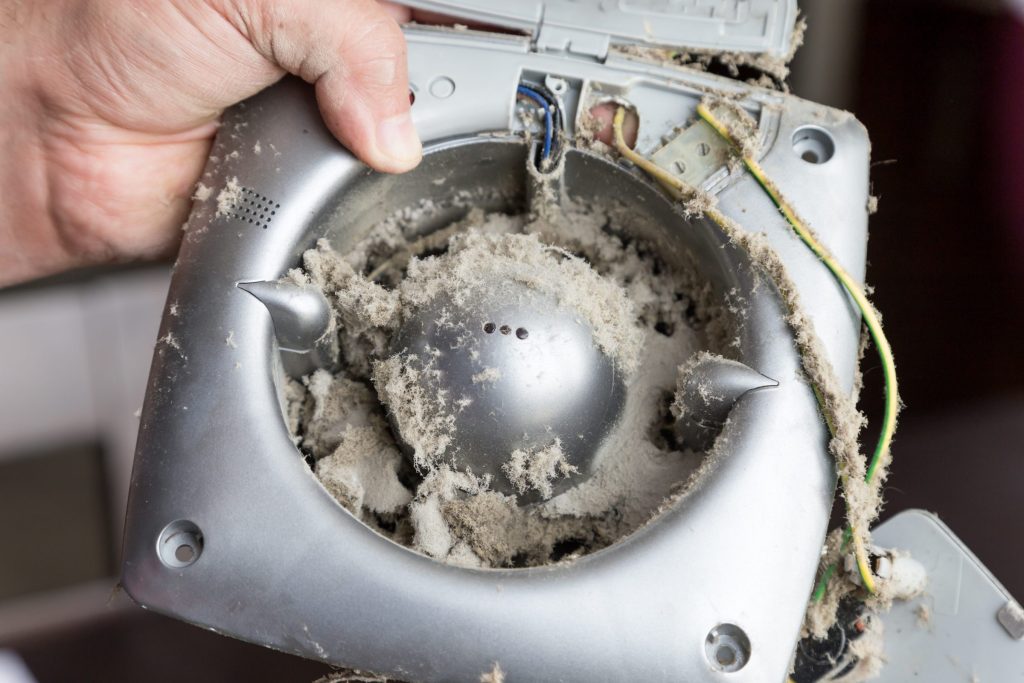
The blower housing behind the filters. Take a torch to it after the filters are out. Grease in there is grease that got past, and it is the material that eventually reaches the motor bearings.
A degreaser and a cloth, as far in as you can reach, once or twice a year. It is not pleasant work and it is the difference between a filter routine and a repair.
Getting them back right
Baffles have a direction. They are shaped so air has to change direction sharply, which is what makes the grease drop out rather than carry on. Fitted backwards they still clip in and they work noticeably worse — and nobody ever finds out, because the hood still makes the right noise.
Photograph them in place before the first time.
Where the grease goes when the filters stop catching it
A baffle filter is the first thing in the path, not the only one. In the order the air travels:
- The baffles, which throw grease out of the airstream by making it turn.
- The grease channel under them, emptied rather than washed.
- The blower wheel, where a neglected hood gets expensive: grease builds unevenly on the blades, the wheel goes out of balance, and a hood that has been noisy for a year arrives with a motor carrying a vibration it was never designed for.
- The duct, where a coating reduces what the hood can move however healthy the motor is.
- The damper at the end, which has to open against that coating every time.
Cleaning keeps the problem at step one. Everything from step three onward is a visit, and it is why we ask how long a Viking hood has been noisy before quoting anything.
Ducted, recirculating, and what South Florida adds
- Ducted — the air leaves the building, and the symptoms are about airflow: a damper that will not open, a long duct run, a blower that has slowed. Nothing about smell.
- Recirculating — a charcoal filter behind the metal one, replaced rather than washed, and a saturated one looks exactly like a new one. The complaint here is smell rather than noise.
Two things are specific to being near the water: the damper corrodes in salt air and is the part most likely to seize on an otherwise perfect hood, and grease that has absorbed humidity is harder to shift — which is the practical argument for monthly rather than "when it looks bad".
Make-up air is real in a tight kitchen. A powerful hood pulling from a sealed room has to get air from somewhere. If cracking a window changes the noise, that is what you are hearing, and no amount of cleaning changes it.
What this is preventing
A capacitor is inexpensive. A blower motor is not, and it is the part that grease reaches last and kills first. Filters are the cheapest maintenance in the kitchen and the hood is the appliance where that maintenance is most directly connected to what breaks.
If it turns out to be a repair
What this leads to, and what it costs
Every job on this site is priced the same way: an on-site diagnostic first, the figure agreed in writing before anybody starts.
-

from $145 Appliance maintenance
One visit that covers the intervals this climate shortens: condensers, filters, descaling, burner ports and the drain paths. It is the visit that keeps the other twenty-six away.
- Condensers cleaned on every cold appliance in the kitchen
- Descaling on anything with a water side
- Burner ports and grill hardware checked before the season
-
A hum is better news than silence Range hood not extracting
A hood that does nothing, hums without turning, or runs and moves no air. Three different repairs behind one complaint, and the cheapest of them is very common.
- No response at all from any speed
- A hum with no rotation
- It runs but the kitchen still fills with steam
-

A separate circuit entirely Range hood lights not working
Lamps that have gone out while the fan works perfectly, or lights that flicker. A separate circuit from the motor, and usually the least expensive call on this list.
- One lamp out, the rest fine
- All lamps out with the fan still working
- Flickering, or lights that come on and drop out
-
Wall · Chimney · Island · Liner · Rear downdraft · Ceiling Ventilation
Wall hoods, chimney hoods, the liners hidden inside joinery, ceiling units and the rear downdrafts that rise out of the counter. It is the shortest parts list in the kitchen — motor, capacitor, switch, lights, damper, filters — and the appliance most likely to be quietly running at half its output for a year.
- A blower that hums and will not turn
- Speeds that no longer change
- Grease finding its way back into the room

Questions people ask about this
How often really?
Over a professional open burner, monthly is not excessive. The manuals assume a domestic cooktop and this is not one — the burner throws far more into the hood, and grease past the filters is what eventually costs a motor.
Can baffles go in the dishwasher?
Stainless baffles, yes, top rack. Aluminum mesh discolors in a dishwasher, which is cosmetic rather than harmful but people mind. Hot water and a degreaser is the kinder route for those.
Do I have a charcoal filter?
Only if the hood recirculates rather than venting outside. Ducted hoods have no charcoal filter to look for and nothing to buy again.
The hood is loud but does not extract much.
Take the filters out and run it. If the airflow is transformed, it was grease. If nothing changes, look at the damper or the duct — a hood can run perfectly and move nothing.
Does it matter which way the baffles go back?
Yes. They are shaped to force air to change direction so grease drops out, and reversed they still fit and work considerably worse.
Maintenance & Prevention
More guides like this one
-

Changing a Viking Water Filter — and What the Indicator Is Actually Counting
Two filters, not one, and neither indicator measures anything — both count time. In this water that matters, and so does the reset.
Read more -
Viking Oven Door Locked After Self-Cleaning: Why It Happens and What Not to Do
How long the cycle should take, what interrupting it does, and the release sequence on the ranges that have one. Plus the one thing that turns a latch repair into a latch and a door.
Read more -
Cleaning Viking Refrigerator Coils: The Quarterly Job That Prevents the Expensive One
The manufacturer asks for it every three months. On this coast that interval is real rather than conservative — and on a full-line kitchen it is five condensers, not one.
Read more
Tell us the model number and what it is doing.
This article is based on:
- Official manufacturer documentation
- Internal repair procedures
- Technician repair history
- Company quality standards
 English